Last updated: November 3, 2026
At a Glance
"China motorcycle season" is what foreign riders settle before booking flights — in the same July, Hainan bakes while Duku just opened, Tibet grassland is green and Inner Mongolia still shows canola; in the same January, Hainan is shorts weather while Sichuan West passes are snowed in. Pick the season wrong and even a classic route disappoints. This guide maps the Chinese riding territory month by month: where to go March–May, June–August, September–October, what is closed in winter, plus a 12-month table and two real examples of lining season up with visa timing.
Season Sets the Route, the Route Sets the Ride
"When is it right to ride a motorcycle in China?" needs an answer before "which line". China spans dozens of degrees of latitude — in July, Hainan bakes, the Duku Highway just opened, Tibet grassland is green and Inner Mongolia still shows canola; in January, Hainan is shorts weather while Sichuan West passes are snowed in. Choose the season wrong and even a good route is wasted.
Last month an Israeli rider messaged in December, planning to enter at Mohan in late January and ride G214 from Kunming into Tibet. I advised him to move to April instead — in late January the Baima Snow Mountain section of G214 is thick with black ice and Zheduo Mountain is under near-daily control; no Adventure-tread depth fixes that. This happens several times a year, so this guide breaks China’s riding seasons down by month: where in March–May, where in June–August, where in September–October, what is closed in winter, then a 12-month table.
March–May: Spring Blossoms — the Golden Window for the South
From March, southern China enters riding season first. Yunnan wakes up earliest — Xishuangbanna, Yuanyang rice terraces, Dali’s Erhai lake — 15–25 degrees, canola and cherry blossoms opening in sequence. This month southeast Yunnan, Guizhou and Guangxi are all comfortable; Guangdong, Fujian and Hainan further south even more so. A bowl of rice noodles by Dali’s old town wall is 10 RMB, and the wind around Erhai smells of flowers.
April–May pushes north: Jiangnan (Jiangsu–Zhejiang) blooms, Sichuan West becomes rideable (April–June), and G214 enters its first good window (late April–May: less rain, clear snow peaks). Central and east China are all green.
March–May cautions: late frosts — mornings and evenings are cold in the north and mountains, with residual snow on Sichuan West and northern Yunnan passes. Pack for "cold morning, warm noon". Do not force high passes before April.
Foreign riders: entering March–May catches the best-behaved first half of the year across most of China — in at Mohan and ride north as it warms; a very comfortable rhythm.
June–August: Tibet & Xinjiang Window — but Crowds and Rains
June–August is the riding season for Tibet and Xinjiang, and the open window for the Duku Highway (June–October). Tibet grassland greens and lakes turn blue; Xinjiang grassland is green too, Duku reopening around June 1. If you want these two regions, these are the months.
But June–August brings three things to face:
Crowds. Summer vacation is China’s peak travel season — heavy traffic on the G318, tight lodging, queues on the popular Duku sections. The road is the same; the experience is not.
Rain. Mid-June to August is the rainy season on G214 and in Sichuan West, with rising landslide risk; parts of Tibet are also affected. Check weather before mountain sections and hold off during sustained rain.
Heat. South, central and east China are hot and humid in July–August — the Yangtze delta feels like 35°C-plus, not riding weather. These months belong to the plateau and northwest: central-north Yunnan, Sichuan West, Tibet, Qinghai, Xinjiang, Inner Mongolia.
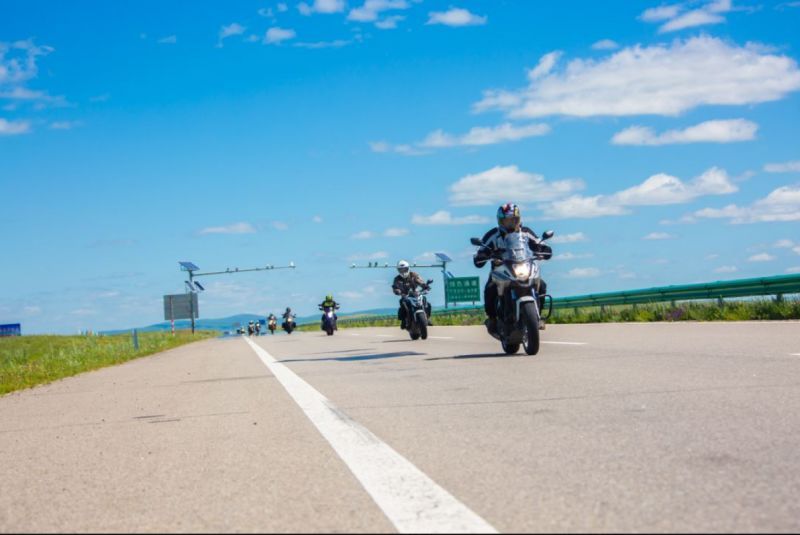
The Qinghai Lake loop is at its prettiest in July–August — lakeside canola in bloom, guesthouses 200–400 a night. Inner Mongolia grassland is good June–September.
Foreign riders: a Tibet itinerary needs a Tibet Travel Permit and a full-time guide, with documents one month ahead; from Xinjiang to Tibet you must loop back through Golmud on the Qinghai–Tibet Highway G109 — the G219 Dahongliutan section and the Kashgar–Yecheng to Rutog (Pangong Tso) section are not open, and the new unmanned-area national road in the Minfeng direction is closed to foreigners. When planning a Xinjiang–Tibet run, write the G109 detour into the route.
September–October: Autumn Colours — the High-Value Window
September to October is the answer many who have ridden China give: rainy season over, weather stable, autumn colours at their richest.
Sichuan West: late September–late October is the golden window — high snow-peak visibility, layered autumn forest; Xinduqiao guesthouses 150–250, a yak hotpot for two 120–150.
G214: September–October is the autumn golden period around Meili — layered colour, dry surface.
Xinjiang: Duku winter-closes around mid-October; ride it in September and still catch grassland turning gold.
Inner Mongolia: grassland turns gold in September.
Qinghai: lakeside grass turns gold, sky high and land wide.
October brings falling temperatures — near zero at night in the north; upgrade the gear. September is the safer choice; in October, watch the weather and close the northern lines early.
November–February: Winter — What Is Closed, What Still Rides
From November the riding map of China shrinks sharply. First, what is closed:
High-altitude mountains: Sichuan West passes, northern Yunnan highlands and most Tibet lines snow over in winter — high risk, not recommended. Northern Xinjiang: Duku closes around mid-October; the north has a long snow season. Northeast China and northern North China: minus 10 to minus 30 — not riding season. Parts of the Gansu border restricted zones: closed by the rules, and in winter not worth considering at all.
Where you can still ride in winter:
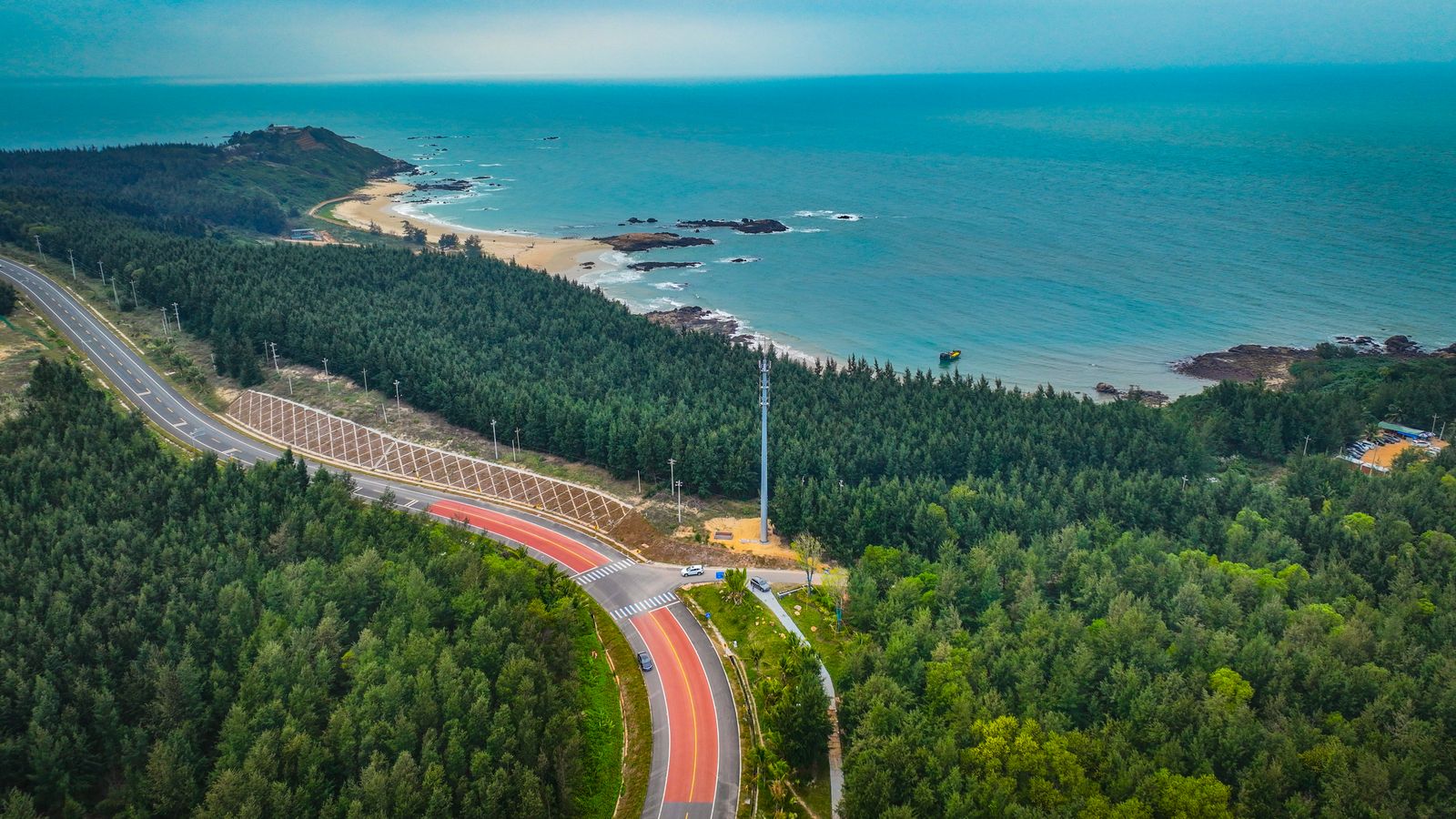
Hainan: the island loop stays around 20 degrees in winter — the place to ride for warmth; a bowl of Hainan noodles at the Haikou Qilou arcade is 12 RMB, and a seafood feast for two at Wenchang’s Qinglan harbour can be had from 150. Southern Yunnan: Xishuangbanna, Yuanyang and Pu’er stay warm with fruit and flowers in bloom. Southern Guangdong, Guangxi and Fujian: mild along the south coast. Kunming–Dali–Lijiang: rideable by day, cool mornings and evenings — mind the 1,900–2,400 m temperature swing.
So in winter, the direction is clear: south and low. The Hainan loop plus the southern Yunnan line are the main winter options.
Foreign riders entering in winter: 30 days visa-free plus a 3-month temporary plate — enough time for Hainan and Yunnan in winter. Neither is in a restricted zone; ride your filed route normally.
The 12-Month Quick Table
| Month | Recommended Regions | In One Line |
|---|---|---|
| March | Southern Yunnan, SE Yunnan, Guizhou, Guangxi, South China | Spring starts in Yunnan |
| April–May | Jiangnan, Sichuan West, Yunnan–Tibet G214 | First window for blossoms and snow peaks |
| June | Tibet, Xinjiang (Duku open), Qinghai, Inner Mongolia | Plateau season opens — and the crowds |
| July–August | Tibet, Qinghai Lake, Inner Mongolia grassland, Duku | Grassland and lakes at their best; skip the humid south |
| September | Sichuan West, G214, Xinjiang, Inner Mongolia | Rain over, autumn arrives |
| October | Sichuan West, G214, South China | Autumn peak; the north cools by month-end |
| November | Hainan, Southern Yunnan, South China | The riding map shrinks south |
| December–February | Hainan, Southern Yunnan | Winter rides south — island and tea hills |
My Experience: Three Judgements About Season
First, for a long China line, choose late April–May or September. Both windows have less rain, comfortable temperatures and relatively few people — the times for G214, Sichuan West and the Qinghai line. June–August shows the plateau at full beauty, but with crowds and rain the experience drops.
Second, for window lines like Duku, confirm the open status before booking anything. It opens June–October every year and closes around mid-October; come outside it and the ride is nothing.
Third, winter in China means south. The Hainan loop and southern Yunnan are warm and scenic. Do not attempt high passes in winter — that is not willpower, it is safety and closed roads, and it is not worth it.
Season Planning for Foreign Riders
Want snow peaks in one go: G214 in April–May, or Sichuan West in September–October.
Want grassland and lakes: Qinghai Lake and Inner Mongolia in July–August.
Want Duku: June–October, September first.
Want to escape cold: November–February in Hainan and southern Yunnan.
Want fewer people and comfort: late April–May, or September.
One practical business note: entry documents go in 20 days ahead (one month for Tibet), the deposit arrives 3 days before the crossing, the temporary plate lasts 3 months, visa-free stay 30 days — line these deadlines up with the season when planning. Example: riding G214 into Tibet in May means the documents go in early April. Do not wait.
Lining Season with Visa Timing: Two Examples
30 days visa-free and a 3-month temporary plate set how far one trip can go. Two worked examples:
Example 1 — enter late April, Tibet direction. Documents in by late March (Tibet one month ahead); enter late April, acclimatise in Kunming, then Dali—Shangri-La—Deqin in 5–7 days, right in the late April–May G214 window. To continue into Tibet, arrange the permit and guide early and fill the 30 visa-free days. Entering in this season, rain is scarce and snow peaks clear — the arrangement I have guided most often.
Example 2 — enter September, Sichuan West plus Duku. The rains just ended; ride the Sichuan West loop in 4–5 days, then head northwest to Xinjiang for Duku — still open in September, closing mid-October. Neither Sichuan West nor Xinjiang touches the Tibet restricted zones, so documents 20 days ahead are enough and the pace is relaxed. Exit before the end of October, the deposit refunds on schedule, everything by the book.
In one line: the season sets the direction, the visa sets the rhythm — align the two timelines before departure and you save far more than improvising on the road.
Quick Q&A
Q: Which month is comfortable for motorcycle touring in China?
A: Late April–May and September are what most riders who have done it choose: less rain, good temperatures, relatively few people.
Q: Can I ride a motorcycle in China in winter?
A: Yes — go south. Hainan, southern Yunnan and the south coast stay rideable in winter; high altitudes, northern Xinjiang and the northeast are not.
Q: When is the Duku Highway open?
A: Every year June–October; winter-closed around mid-October.
Q: What should I watch in Tibet in July–August?
A: Peak crowds and peak rains — ride the line but leave time; a Tibet itinerary needs a permit and guide, with documents one month ahead.
Q: How do foreign riders link Xinjiang and Tibet?
A: The G219 Dahongliutan and Yecheng–Pangong Tso sections are not open; from Xinjiang to Tibet you must loop back through Golmud on the Qinghai–Tibet Highway G109.
Season settled, the route has meaning: spring wakes in Yunnan, summer heads to the plateau and grassland, autumn shows China’s colours, winter rides south to Hainan and southern Yunnan. Save the month table, pick by your window — the rest is just leaving.
For help or a quote, contact us: Yunnan Province International Travel Agency (Group) Co., Ltd. Phone / WhatsApp: +86 13759155671; WeChat ID: qxzj7557; Email: [email protected]. I’m Zara — send me your planned month, entry port and target line, and I will put the document deadline and deposit date into your calendar together.
Planning to ride your motorcycle into China?
We handle the entire entry process — customs, plate, permit, guarantee. You ride across on entry day and focus on the road.
WhatsApp / WeChat: +86 13759155671 · Email: [email protected]
Contact Us Now →