Last updated: November 3, 2026
At a Glance
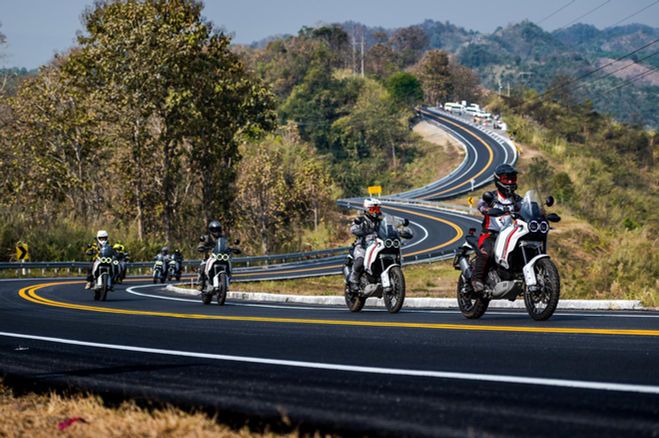
"Thailand to China by motorcycle" is one of the most asked questions among riders in Chiang Mai and Chiang Rai — do you have to go through Laos, how many kilometres is the whole trip, how many days to Mohan, do right-hand-drive bikes pay extra, and where do you stop first after Mohan? This guide walks the route I have ridden alongside Thai riders many times: how to ride Chiang Mai to Chiang Khong, how the Mekong ferry works, which part of Laos Route 13 is rough, how the Mohan entry is handled, and how to settle into Kunming. By the end you will have a timeline you can follow.
Why This Route Guide Exists
Riders from northern Thailand planning to ride into China ask the same few questions: which way from Chiang Mai, do I have to pass through Laos, where is the first stop after Mohan, and how long should I allow? Last month a Chiang Mai rider on a Kawasaki Z650 booked his paperwork a month early. He had watched a video of a foreigner riding a Honda CB300R along the same line, which claimed "two days to Mohan". He planned accordingly — then hit roadworks on the Laos stretch near Huay Xai, lost most of the day, and reached Boten in the dark at 9 pm. Waiting for the gate to open, he told me: "the video lied." The route is fixed: Chiang Mai—Chiang Rai—Chiang Khong, ferry across the Mekong, enter Laos at Huay Xai, follow the direction of Laos Route 13 to Boten, then cross into China at Mohan. The whole distance is about 550–600 km; at a relaxed pace 1.5–2 days gets you to the border.
Step 1: The Thai Leg, Chiang Mai to Chiang Khong
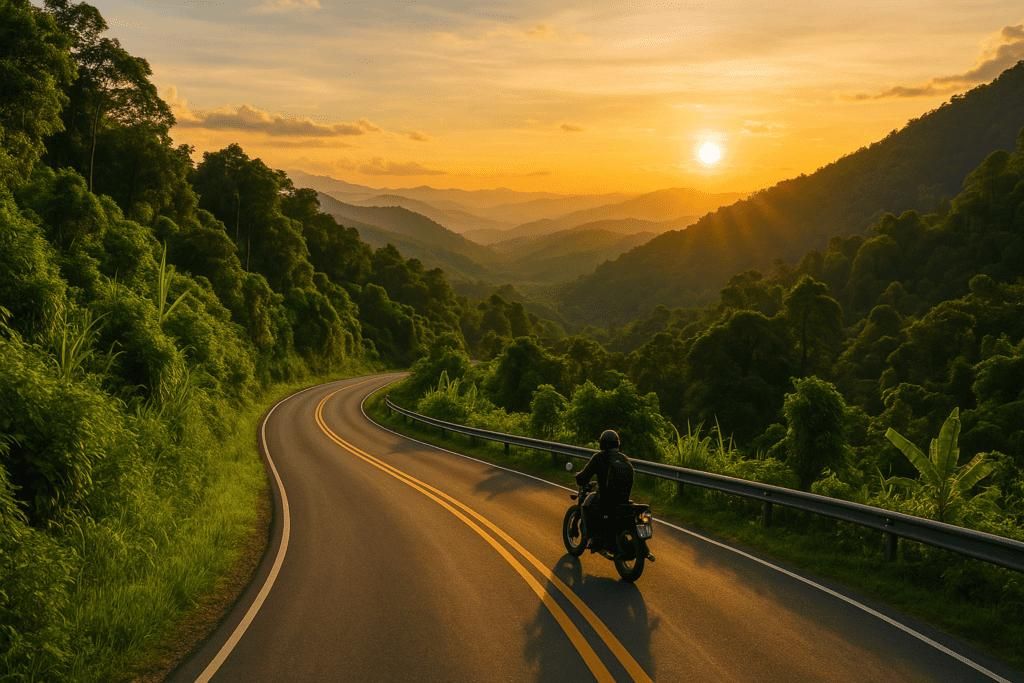
Chiang Mai to Chiang Rai is about 190 km on the main road of northern Thailand. Good surface, mountain curves, fuel stations everywhere — comfortable riding. No need to rush; half a day to Chiang Rai, stay overnight or keep going. A bowl of Khao Soi (northern Thai curry noodles) at the Chiang Rai night market costs 60–80 baht, about RMB 12–16 — one of the most satisfying meals on this stretch.
Chiang Rai to Chiang Khong is about 100 km, again mountain roads along the Mekong direction. Chiang Khong is a small border town on the Thai side; across the river is Huay Xai, Laos. Before Chiang Khong, fill the tank at a station — it is the last fuel point on the Thai side before Laos, where stations are further apart. 95-octane at Chiang Khong runs about 35–38 baht per litre; in Laos it works out about 1 RMB more per litre.
Crossing the river is by ferry — rider and motorcycle together, a few minutes to the other bank. The ferry is cheap, roughly 50–80 baht (about RMB 10–16). Before crossing, complete Thai exit formalities at the Chiang Khong checkpoint — a quick stamp.
A veteran note: Thailand drives on the left, Laos on the right. After the Mekong the side changes — pay extra attention in the first kilometres, especially corners and oncoming traffic. I once saw a client step onto the Huay Xai bank and instinctively drift to the left lane; a pickup truck came head-on, he braked hard, and spent 15 minutes parked by the roadside recovering.
Step 2: The Laos Leg, Huay Xai to Boten
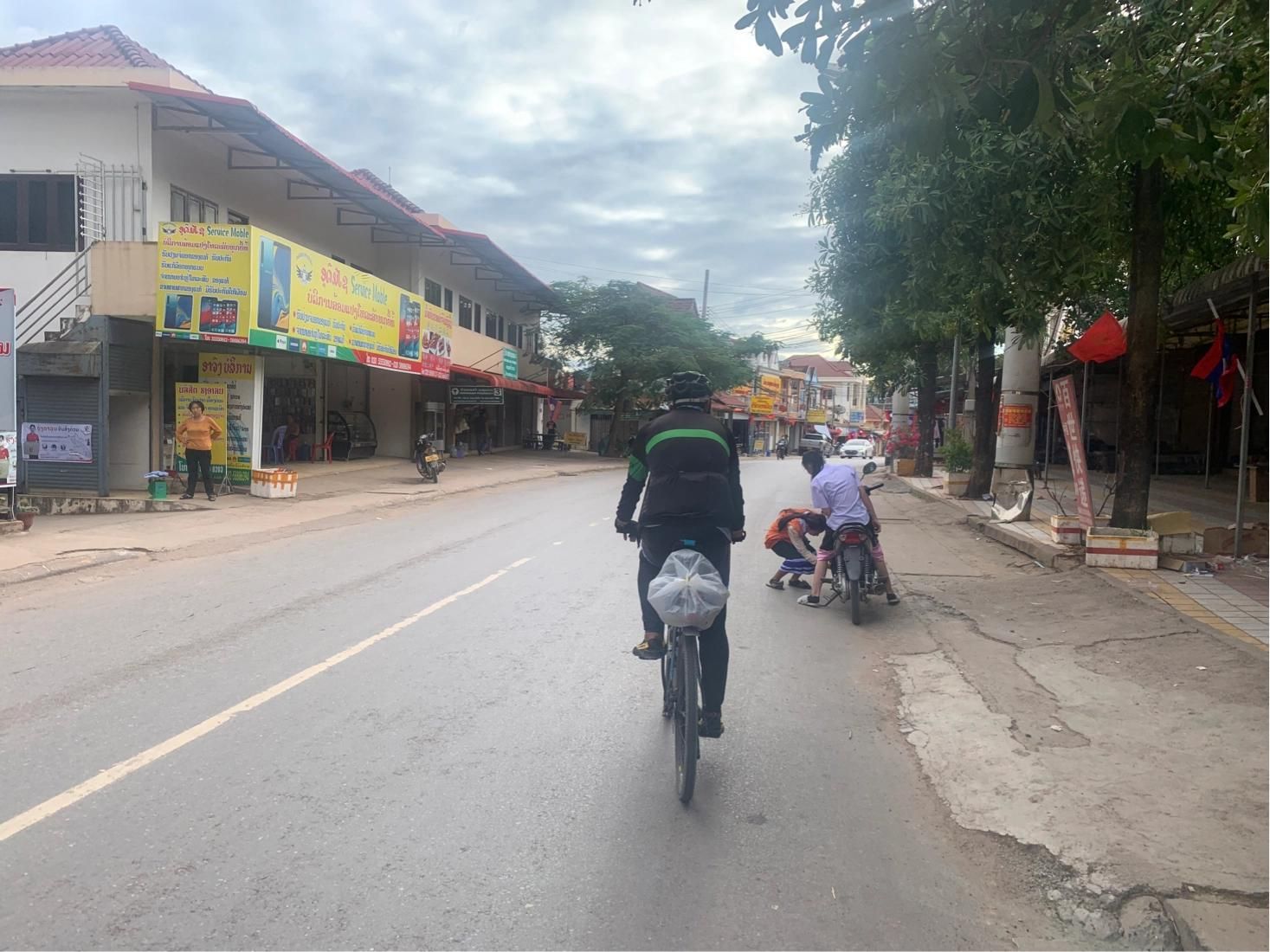
Huay Xai to Boten is about 230 km, part of Laos Route 13 and the stretch with the most variable conditions on the whole trip. It is a mountain road — tight bends and steep grades. The surface is generally rideable, but some sections are under construction with heavy machinery, dust and rough patches. Hold speed to 50–80 km/h; do not push it. In the rainy season (June–September) mud can bury half a wheel; in the dry season the dust is thick enough to need a face cover.
Along the way you pass a few small Lao towns where you can fuel and eat. Stations in Laos are further apart than in Thailand — fill up whenever you see one, do not wait for the low-fuel light. A bowl of Lao noodle soup costs about 25,000 kip (roughly RMB 12) — simple and filling. Accommodation on the Laos leg is limited and basic; if you want to stop for the night, Huay Xai or towns along the way work, with guesthouse beds from 80–120 RMB, and continue to Boten the next day.
At Boten you are close to the Chinese port of Mohan — about 20–30 km. Boten is developing fast and the road changes; follow the signs and complete Lao exit formalities before the crossing.
A paperwork note on the Laos leg: vehicles transiting Laos from Thailand need a temporary vehicle entry procedure at the Lao border and Lao vehicle insurance. Follow Lao traffic rules, drive on the right, control speed. This is the stretch that needs the most patience — safety first.
Step 3: Entering China at Mohan
Mohan is the land port between China and Laos, and the main choice for Thai riders entering China. The port is not open 24 hours — opening times can vary by day, so check your specific day in advance and arrive in time. Better to stay in Boten or Mohan town the night before and cross fresh in the morning.
The entry day process is covered in detail in the Mohan guide; here is the short version: agency-guaranteed customs declaration (filed in advance), immigration transit, vehicle inspection, Chinese temporary driving licence, Chinese temporary plate (3 months), route filing. The agency handles it and staff guide you on site — you just follow, half a day to a day.
Key numbers again: Mohan motorcycle entry service fee RMB 5,000–6,000 per vehicle; Thai bikes are right-hand-drive — no problem, all ports accept them at the same price as left-hand-drive, no surcharge. Deposit RMB 10,000, in 3 days before crossing, refunded 3–5 working days after exit. Documents 20 days ahead (one month if Tibet is included).
Step 4: First Stop After Entry — Kunming
After Mohan, the first stop worth settling into is Kunming. Mohan to Kunming is about 700 km, all expressway, doable in a day. Good road, full service areas; just budget fuel and tolls. Motorcycles pay lower tolls than cars on Chinese expressways — roughly 0.3–0.4 RMB/km, so 700 km runs 200–300 RMB. Kunming sits at about 1,900 m elevation; riders coming from low-altitude Southeast Asia usually stop a day here to acclimatise and service the bike. A chain hotel in Kunming costs 200–300 a night; a bowl of crossing-the-bridge rice noodles at Qiaoxiangyuan runs 25–35 RMB — a very comfortable first meal in China.
From Kunming you can head north on G214 to Shangri-La and toward Tibet, east to Guizhou and Guilin, or south to Dali and Lijiang. Route choice depends on your time window — remember 30 days visa-free plus a 3-month temporary plate; plan the timing to match.
How Long Should the Whole Trip Take?
Chiang Mai to Mohan is about 550–600 km. At a veteran’s pace:
Day 1: Chiang Mai—Chiang Rai—Chiang Khong, about 290 km, half to one day; stay in Chiang Khong or cross and stay in Huay Xai.
Day 2: Huay Xai—Boten, about 230 km, one day; stay in Boten.
Day 3: Boten—Mohan, about 20–30 km; cross in the morning, formalities in half a day.
So Chiang Mai to completed entry in 3 days is a comfortable rhythm. In a hurry, 2 days is possible, but do not ride the Laos mountain road at night. Add one more day to reach Kunming. Chiang Mai to Kunming in 4 days is a sensible timeline.
What Does It Cost?
The route cost splits into road costs and entry costs.
Road costs (one bike, one rider, at current prices): Chiang Mai to Mohan is about 600 km; at 4 L/100 km that is roughly 24 litres. Thai fuel is a bit cheaper than Chinese, Lao fuel a bit higher — total fuel around RMB 200–300. Thai toll roads are few and national roads free; Chinese expressways are tolled — Mohan to Kunming about 700 km, bikes pay less than cars; figure a few hundred RMB depending on the toll schedule. Food and lodging: two nights on the Thai–Laos side, simple accommodation from 100–200 RMB a night, as you like. The Chiang Khong–Huay Xai ferry: a few dozen RMB.
Entry costs (fixed items): Mohan service fee RMB 5,000–6,000 per vehicle; deposit RMB 10,000 (refundable); insurance — compulsory traffic insurance is required, optional commercial third-party from RMB 500,000, bought by the agency before entry; inspection (bikes over 6 years): about RMB 200; translation: handled by the agency at actual cost.
My Experience: How to Ride This Route Smoothly
First, the Laos leg is the part that needs buffer. Roadworks are common and rain makes it worse — do not schedule Huay Xai to Boten too tight; better to stay in Boten and cross the next morning.
Second, fill the tank on the Thai side before Chiang Khong. Laos stations are far apart and first-timers underestimate that stretch.
Third, the switch to right-side driving: after the ferry, ride slowly for 20 minutes and let your body learn "right side in corners" — safer than correcting habits later.
Fourth, start your China entry documents with the agency before you leave; do not wait until Mohan — the 20-day deadline is hard.
Fifth, right-hand-drive bikes enter China with no problem and no surcharge. What needs adaptation is right-side driving — keep attention on expressway ramps and overtaking in the first days.
The Return Trip: Exit Mirrors Entry
When you are done and heading back to Thailand, exit is the mirror image of entry: complete Chinese exit formalities at Mohan (customs clearance and immigration exit are both included in the service fee), then ride Laos Route 13 back, ferry across the Mekong at Huay Xai to Chiang Khong. Before exiting, confirm three things: the bike is in order within the plate validity, there are no outstanding violations, and the deposit refund is in process — with those three, the RMB 10,000 is returned by the original route 3–5 working days after exit.
On the way back you already know the road. One reminder: check the opening times for Chinese exit and Lao entry in advance — the ports are not 24-hour, so do not arrive just before closing. Leave buffer on the Laos leg and do not ride at night in the rainy season. After a round trip you will know Route 13 better than most locals.
Quick Q&A
Q: How far is Chiang Mai to Mohan?
A: About 550–600 km; at a relaxed pace 2–3 days to the port.
Q: Do I have to go through Laos?
A: Yes. Thailand and China do not share a land border; the overland route to Mohan goes through Laos — ferry at Chiang Khong to Huay Xai, then Laos Route 13 to Boten.
Q: Where is the first stop after Mohan?
A: Kunming, about 700 km away, one day on the expressway; a good place to acclimatise to altitude.
Q: Can a Thai (right-hand-drive) bike enter China?
A: Yes. All ports accept it at the same price as left-hand-drive.
Q: What formalities are needed for the whole trip?
A: Thai exit, Lao temporary entry (including Lao insurance), then China entry (agency-guaranteed declaration, temporary licence, temporary plate, route filing).
Q: Is 30 days visa-free enough for this route?
A: Yes. After entry the temporary plate lasts 3 months and visa-free stay 30 days; to stay longer, ask the agency to issue an invitation letter for a longer visa — approval lies with the embassy, so plan ahead.
Route, time and cost are all laid out: 3 days from Chiang Mai to Mohan, one day for entry, one day to Kunming. Leave buffer on the Laos leg, get documents to the agency 20 days ahead, the deposit in 3 days before — and the route rides steady. See you on the road.
For help or a quote, contact us: Yunnan Province International Travel Agency (Group) Co., Ltd. Phone / WhatsApp: +86 13759155671; WeChat ID: qxzj7557; Email: [email protected]. I’m Zara — send me your bike model, departure city and planned dates and I will line up the Thailand exit, Laos transit and China entry timeline in one go.
Planning to ride your motorcycle into China?
We handle the entire entry process — customs, plate, permit, guarantee. You ride across on entry day and focus on the road.
WhatsApp / WeChat: +86 13759155671 · Email: [email protected]
Contact Us Now →