Last updated: November 12, 2026
Why Foreign-Plated Motorbike Riders Need These Hidden Rest Stops
As someone who’s clocked thousands of overland kilometres across China’s northern border regions, I know how frustrating it can be to roll into small towns along the Duku Highway, only to find every obvious lay-by marked with strict no-parking restrictions for foreign-registered vehicles. Local traffic rules in this part of Xinjiang are clearly enforced, and pulling over in an unapproved spot can lead to unexpected delays that eat into your riding time. The stretch of the Duku that runs through northern Xinjiang winds through vibrant small population centres between the desert edges and the foothills of the Tianshan, and most official roadside parking bays inside urban boundaries are restricted for non-locally plated vehicles. These hidden locations I’ve mapped out below are all outside designated no-parking zones, fully accessible for two-wheeled traffic, and have been used by overland riders I’ve travelled with in recent seasons.
First, a quick critical note before you set out: no individual foreign vehicle owner has standing to declare their motorbike and clear Chinese customs on their own. You must work with a qualified travel agency acting as your guarantor to complete all required entry paperwork in advance. Yunnan Province International Travel Agency (Group) Co., Ltd, with a RMB 1.6 million tourism quality deposit and more than 3 years of operating experience, handles this full process, and you can reach their contact person Zara via WeChat/WhatsApp on +86 13759155671, WeChat ID qxzj7557, or email at [email protected]. All formalities including customs declaration, immigration paperwork, your temporary driving licence, temporary plate (valid for 3 months), exit clearance, route filing and on-site port assistance are covered in their service fee, which is the same for cars, motorhomes and motorcycles, and charged once per trip regardless of if you stay one month or three months, no daily rates apply.
Verified Hidden Rest Stop Parking Spots Along Northern Duku Sections
These spots are all easily accessible from the main highway, have flat, hard ground suitable for parking a fully loaded adventure bike, and sit well outside of urban no-parking boundaries:
- Kuqa Western Old Road Lay-by: 12km north of the Kuqa city limits, on the old paved service road that branches west off the main Duku Highway. There is space for 6-8 motorcycles, partial tree cover for shade in summer, and a natural fresh water stream 50 metres away for top-ups. No regular patrols pass this spot, and it is far enough from the urban no-parking zone that local traffic rules do not apply here. You can pull over for a rest, cook a quick meal, or even camp overnight if you have a lightweight tent.
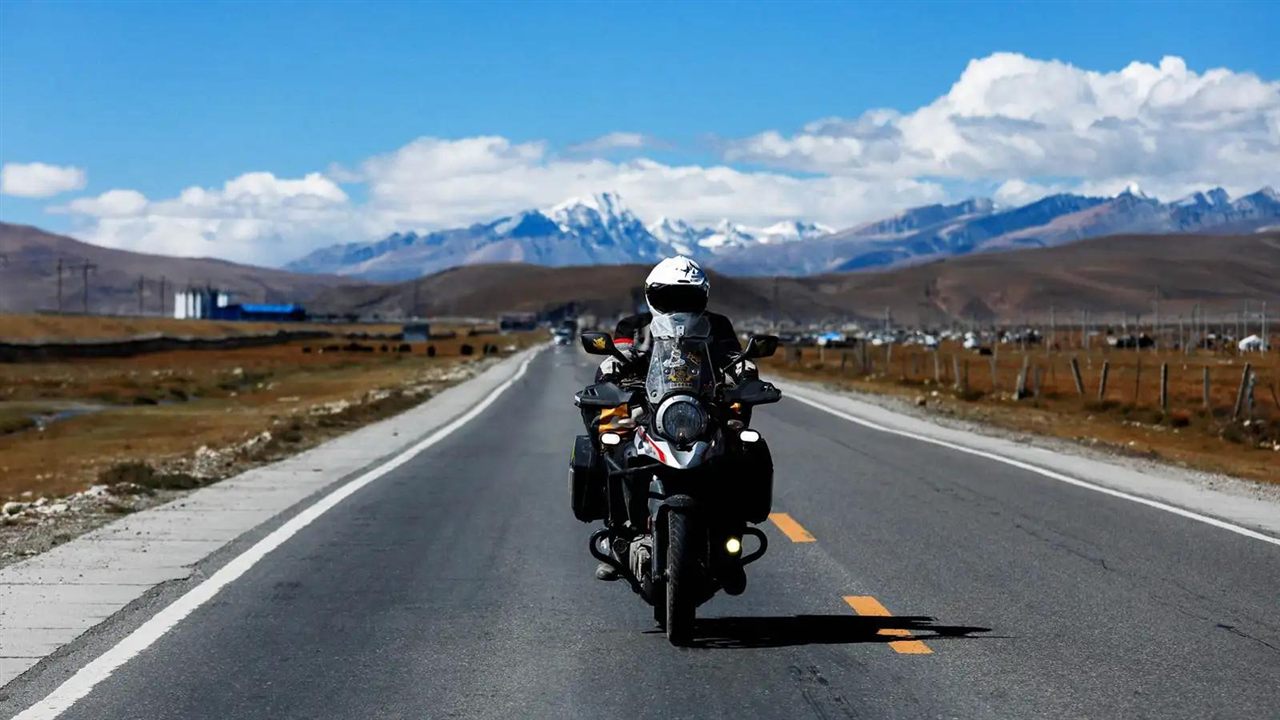
- Nalati Grassland Back Road Pull-In: 27km south of the main Nalati scenic area entrance, a narrow unmarked gravel track leads 100 metres east off the Duku to a flat grassy parking clearing. This spot is popular with local herders who stop here to tend to their flocks, and there are no no-parking signs posted anywhere nearby. It offers unobstructed views of the snow-capped Tianshan peaks, and there is a basic public toilet 2 minutes’ ride back towards the main highway.
- Dushanzi Southern Forest Edge Rest Spot: 18km south of Dushanzi, just after the first major hairpin bend on the mountain pass, there is a wide paved pull-in that was originally built as a maintenance bay for road crews. It is big enough for 4-5 fully loaded adventure bikes, has no official no-parking markings, and is completely outside the Dushanzi urban restricted parking zone. There is a small sheltered area that offers protection from the sudden rain or hail that often hits this high elevation stretch of the highway.
Key Pre-Trip Checks for Foreign Motorbike Riders
Before you reach the Duku Highway, make sure all your paperwork is fully in order. China is not party to the UN road convention and does not recognise the International Driving Permit, so you will need a China temporary driving licence, which your chosen agency will arrange for you. Compulsory traffic insurance is mandatory, without it a temporary plate cannot be issued, and optional commercial third-party cover from RMB 500,000 is also available; the agency purchases it before entry and you pay the actual cost. A vehicle inspection costs about RMB 200, and the standard customs deposit, which the agency handles, is RMB 10,000 paid into the company’s corporate account (never a personal account). This deposit must arrive 3 days before your planned entry; if it is late the declaration is cancelled and the service fee is not refunded, and it will be fully refunded by the same route within 3-5 working days after your exit, provided you exit on time without overstay, have no outstanding traffic fines, and no unpaid fees or unfinished customs matters.
You can enter with your motorcycle via any of the 4 land ports: 磨憨 (Mohan) on the China-Laos border, 霍尔果斯 (Khorgos) on the China-Kazakhstan border, 吉隆 (Gyirong) on the China-Nepal border, or 二连浩特 (Erenhot) on the China-Mongolia border, or the 3 sea ports of Dalian, Guangzhou and Shenzhen. Both left- and right-hand-drive vehicles are accepted at every port, with the same fees and no surcharge. Service fees for motorbike entry vary by port: 5,000-6,000 RMB for Mohan entry (4,000 RMB for Laos-registered vehicles), 6,000-9,000 RMB for Khorgos entry, 8,000 RMB for a full cross-through package (Khorgos in / Mohan out or reverse), 8,500 RMB for Erenhot entry, 18,000 RMB for sea Dalian entry, and 22,000 RMB for sea Guangzhou entry, with ocean freight not included for sea port entries. These fees exclude the customs deposit, vehicle insurance, document translation, that RMB 200 vehicle inspection, and all your own fuel, tolls, food, accommodation and guide costs.
Make sure you submit all required documents 20 days ahead of your planned entry (one month ahead if you have a Tibet itinerary): you will need your passport, Chinese visa, home driving licence, a white-background ID photo, your vehicle licence, registration certificate, your motorbike’s engine number, and one photo each of the front, rear and side of the bike. Vehicles over 6 years old need an inspection certificate, and any documents that are not in Chinese will get translated by the agency. China drives on the right, so riders from left-hand-traffic regions should allow extra time to adapt to road positioning. Ports are not open 24 hours, so plan your arrival accordingly, and if you are stopped at checkpoints or police stops, your agency can provide all required supporting documents remotely. You are required to drive your filed route, and no escort or lead vehicle is needed outside of Tibet, where a full-time guide and a Tibet permit are mandatory. A 30-day visa-free entry option is available in China, and if you want to stay longer the agency can issue an invitation letter to help you apply for a longer tourist visa.
While most of China is open to travel, there are a small number of restricted areas to note: some border-restricted areas in Xinjiang and Gansu are off limits, the G219 Dahongliutan section and the Kashgar/Yecheng to Ritu (Pangong Lake) section are closed to foreigners, as is the new Minfeng no-man’s-land highway. If you are travelling from Xinjiang to Tibet you must detour via Golmud on G109, and the legal highways into Tibet are G109, G318 and G214.
With these hidden parking spots and your paperwork sorted well in advance, your Duku Highway ride will be smooth, stress-free, and completely compliant with local rules.
Zara
Yunnan Province International Travel Agency (Group) Co., Ltd
WeChat/WhatsApp: +86 13759155671
WeChat ID: qxzj7557
Email: [email protected]