Last updated: November 6, 2026
Whenever a customer asks me how many kilometres they should aim for on a long motorcycle tour of China, I give them the same answer I give myself: the number on the clock matters a good deal less than how you feel at the end of the day. I have done the heroics, the 600-kilometre slog to prove something, and I can tell you straight that the second half of those days is rarely good riding. Over a few tours now, from the border at Mohan up through Yunnan and out across the western provinces, I have settled into a rhythm that keeps the bike moving, the body fresh and the whole trip enjoyable. Here is how I pace a long ride and keep fatigue in its place.
Start with the terrain, not a target number
A common mistake is to fix on a daily distance before looking at the map. On a smooth expressway through the plains, 400 kilometres can be a fairly relaxed day. On a winding mountain road in Yunnan or Tibet, 200 kilometres can take the same number of hours and ask a great deal more of your concentration. I plan each day around the road type, the weather and the towns, and I treat the mileage as something that falls out of those decisions rather than a goal in itself.
For most riders, a comfortable touring pace sits somewhere between 250 and 350 kilometres a day. That leaves room for a proper lunch, a few tea stops and the slower bits through towns without turning the day into a chase. On the high-altitude legs and the scenic routes, I happily bring that down to 150 or 200 kilometres, because those are the days you actually came for.
Watch the clock, not just the odometer
Time in the saddle is the honest measure of fatigue. My rough rule is six to seven hours of actual riding in a day, split into chunks with regular breaks. Beyond that, the quality of your attention drops off even if you feel fine, and a tired rider makes the small errors - a late brake, a missed sign, a sloppy line - that lead to an accident. I would rather arrive an hour earlier with my wits about me than squeeze in another hundred kilometres on autopilot.
The fix is to build the day backwards from the overnight stop. I mark the hotel on the navigation in the morning, check how long the route should take and set a time to arrive in daylight. That tells me when to leave and keeps me honest about how much ground is realistic.
Take breaks before you need them
On tour I stop roughly every hour and a half to two hours, whether I feel like it or not. Ten minutes off the bike, a walk around to loosen the legs, a stretch of the back and shoulders, a drink of water - it sounds trivial, but it resets the body and the mind before the stiffness and the wandering attention ever set in. I pair these with fuel stops where I can, so the refuel and the break happen together and nothing gets forgotten.
There is a temptation on a big day to push through and bank the distance, but the maths does not work. Two short breaks cost you twenty minutes and give you back hours of sharp riding; skipping them just leaves you sore and slow by mid-afternoon.
Read the warning signs of fatigue
After enough long days you learn to spot it early. The tell-tale signs are the same for most riders: yawning, heavy eyes, drifting toward the white line, missing things you would normally catch, and the point where you cannot remember the last few kilometres. Your backside and lower back start complaining, and the gear changes get clumsy. None of that is bravery; it is your body telling you to stop.
When it happens I pull over at the first safe place, get off the bike and walk. A splash of cold water, a snack and a strong coffee help, and if it is really bad I will find somewhere to put my head down for twenty minutes. A short nap is worth more than any amount of stubbornness. I never try to ride through it, because that is precisely when things go wrong.
Respect the lunchtime lull
After a big midday meal, the hour between roughly one and three is the sleepy one for most people, and the heat of a Chinese summer makes it worse. I use that window for the long lunch stop rather than the bike's hardest stretch. A sit-down meal, a rest in the shade and a slow start back means the afternoon riding is done alert instead of in a daze.
If the day's route has to be a long one, I front-load the miles. An early start gets the bulk of the distance done while the roads are quiet and the body is fresh, and the afternoon becomes the relaxed part rather than the slog.
Altitude and the big open roads
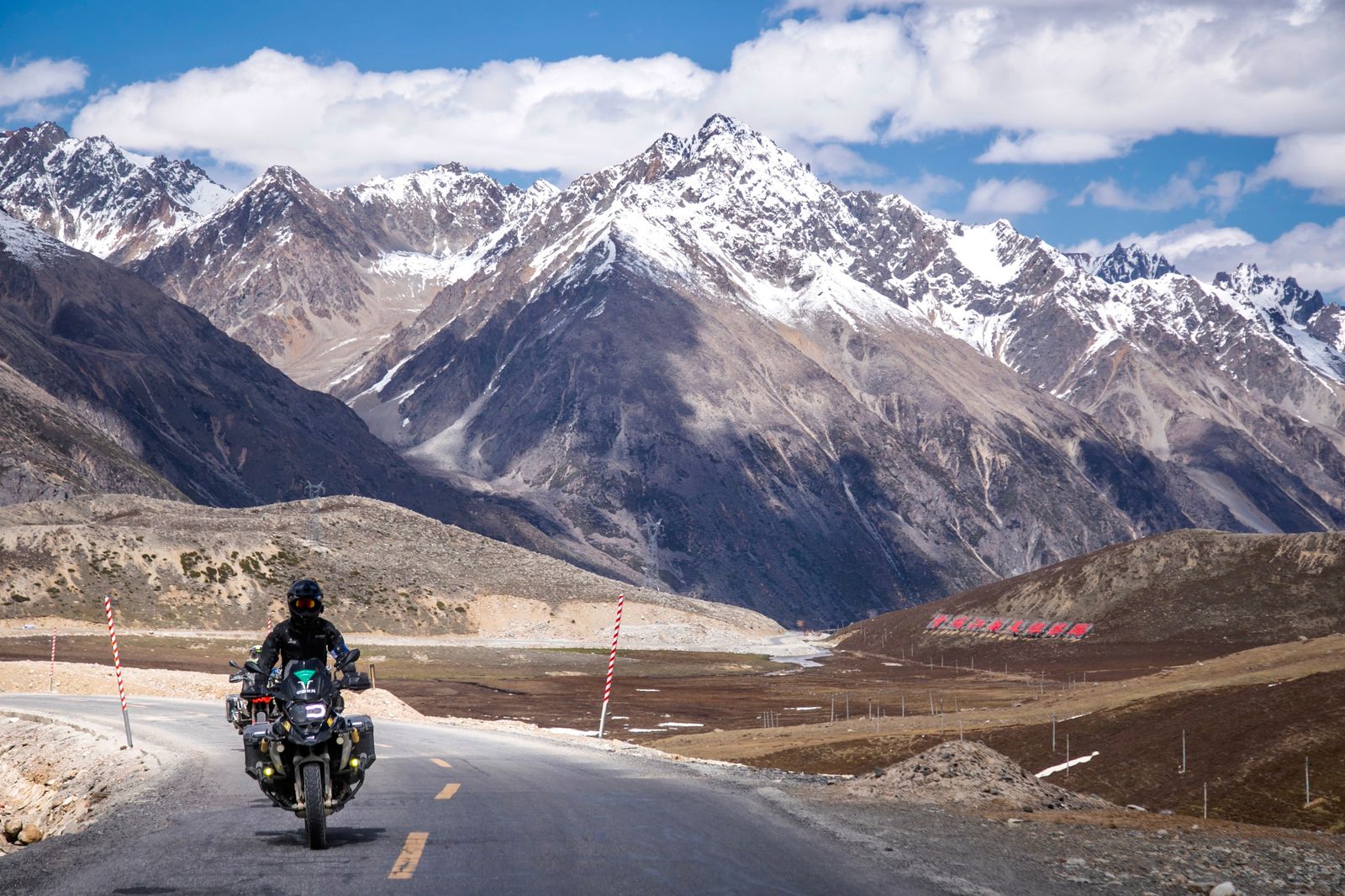
On the Tibetan plateau and the long stretches of Xinjiang and Qinghai, fatigue works differently. The roads are straight and empty, the scenery barely changes and the monotony itself sends you half-asleep even though you are not physically tired. The thin air up high adds to it, and a few riders get headaches and breathlessness for the first couple of days.
I keep those days shorter, take more frequent stops and make a point of varying my concentration - checking the mirrors, running through the route, sitting up and moving around on the bike. Staying hydrated and going easy on the alcohol the night before matter more up high than anywhere else. And remember the restricted stretches: the G219 at Dahongliutan and the road from Yecheng to Rutog by Pangong Lake are closed to foreigners, as are the new no-man's-land highways near Minfeng, so getting from Xinjiang to Tibet means looping back via Golmud on the G109.
Sleep is part of the riding plan
None of the daytime habits matter if you are not sleeping. A quiet room with a proper bed and somewhere secure to leave the bike sets up the whole next day, which is why I choose hotels with their own parking rather than the cheapest place on the street. A solid eight hours, a decent breakfast and a slow morning routine beat a late night and a groggy start every single time.
I also keep the first and last days of a tour gentle. The first day is about settling onto the bike and getting used to the traffic - and if you are on a right-hand-drive machine, remembering that China drives on the right. The last day is when people are already thinking about home and make careless mistakes, so I never load it with a big distance.
Look after the body and the bike
A few small things add up over a long tour. Layered clothing keeps you comfortable through the cold mornings and hot afternoons; earplugs take the sting out of hours of wind and engine noise; a good screen and relaxed grips reduce the strain on wrists and neck. I keep water and snacks to hand so a dip in blood sugar never turns into a bad-tempered hour on the bike.
The machine needs its own rhythm. A quick check of the tyres, chain and lights each morning catches trouble before it strands you, and a well-maintained bike is a calmer, less tiring thing to ride. If the worst does happen and you have a breakdown or a spill, the practical response is the same as anywhere: get off the road, stay visible and take it calmly.
A quick word on the paperwork
Behind all of this sits the formal side of bringing a foreign bike in. The entry is declared by a licensed travel agency; individuals cannot clear customs on their own. The temporary plate is valid for 3 months, and the insurance is arranged before entry at the actual cost. For the customs guarantee, with our surety in place the rider only pays 10,000 RMB into the corporate account, arriving 3 days before entry and refunded in full within 3-5 working days after the bike leaves. The vehicle inspection fee is around 200 RMB for every bike. Right-hand-drive machines are accepted at every port on the same terms as left-hand-drive with no surcharge.
If you have a route in mind and want help setting a sensible daily rhythm around it, send over the planned mileage and the dates, and I will mark out the realistic days, the long legs and the towns worth a slow morning. Pace the trip to stay fresh, and the riding looks after itself.
On a related note, I have also written about timeline here.
Ready to plan your ride into China?
Customs declaration, temporary plate, temporary licence and guarantee - handled for you end to end. Ride across the border on arrival day and keep your energy for the road.
WeChat / WhatsApp: +86 13759155671 · Email: [email protected]
Contact Us Now