Last updated: November 5, 2026
However big China is, that's how much its weather varies. At the same time, the south may be hot and rainy, the northwest blowing sand, the northeast already seeing snow, while on the plateau a single day can run through all four seasons. On a motorcycle you're directly exposed to the weather, unlike a car with a cabin around you: cold, heat, wind, rain, and sun all land on you for real. I've ridden different seasons and regions, been soaked through, sunburned and peeling, and caught in sudden hail on the plateau. Let me lay out weather responses and seasonal gear in an organized way.
Start with a vivid one. On a plateau ride I set off in bright morning sunshine, warm enough in a single layer, but by afternoon crossing a mountain pass the weather changed on the spot: first strong wind, then hail and snow, with the temperature dropping fast. My fingers went numb and my controls felt stiff. Luckily I had a warm layer and a wind-and-rain shell with me, quickly found a spot to put them on, and slowly recovered. After that I never took clothing for granted. No matter how good the weather looked leaving, the gear for change came on the bike.
Know the climate of China's different regions
The south, including south China and parts of the southwest, is humid, with hot rainy summers and concentrated wet-season downpours, strong muggy heat and high apparent temperature, milder spring and autumn, and winters that aren't very cold but carry a biting damp chill. Riding here focuses on heat, rain, and moisture management, with breathable gear.
The north has clear seasons: hot but relatively dry summers, cold dry windy winters, and short spring and autumn with sharp temperature swings. Riding has to cover summer sun protection and winter warmth, and around the change of seasons the difference within a day can be wide.
The arid northwest, like Xinjiang, Gansu, and western Inner Mongolia, has little rain, strong sun, large day-night temperature differences, plenty of windy sandy weather, and noticeable crosswinds on the Gobi and at mountain passes. The keywords are sun protection, wind protection, hydration, and handling temperature swings.
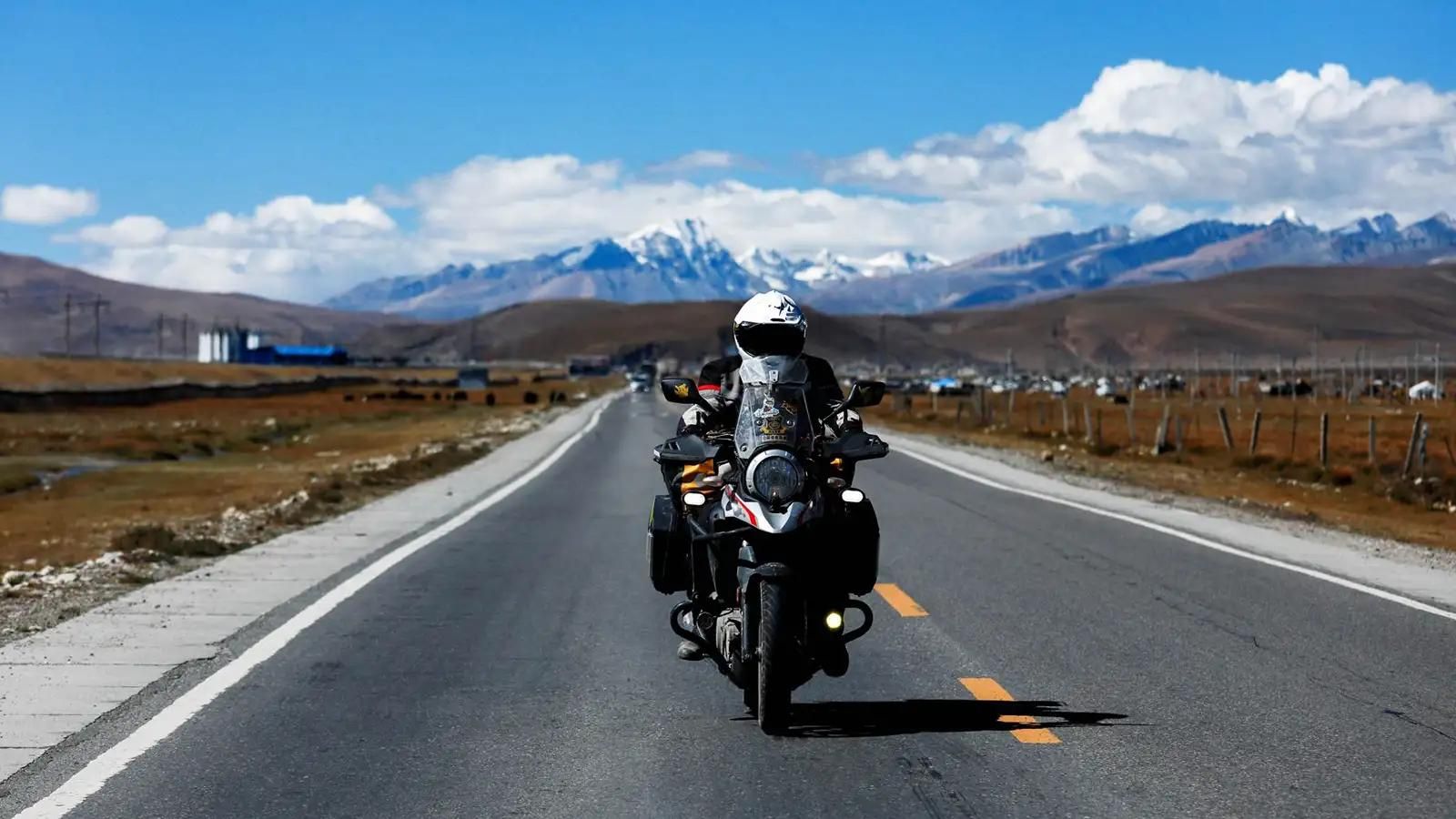
The Qinghai-Tibet plateau and high-altitude zones have thin air, strong UV, low temperatures, and fast-changing weather. Even in summer it's cold morning and evening, and passes may hold snow year-round. Beyond warmth and wind protection, watch altitude sickness here.
The northeast has long, severe winters where temperatures can fall to minus twenty or thirty and lower, with ice and snow on the road for a long stretch, while summer is cool and short and is the season suited to riding.
How to prepare for the four seasons
Spring brings warming but changeable weather, with sand and wind in the north and a rainy period beginning in the south, plus big morning-evening differences. This season suits layered clothing you add or remove as needed, with attention to wind and rain; northern riders watch visibility in dust weather.
Summer is hot across the country, with humid heat, strong sun and thunderstorms in the south, and possible typhoons. Ride around the midday heat, start early and rest late, hydrate against heatstroke, favor breathable gear, and keep rain gear ready for sudden thunderstorms. Coastal areas watch typhoon warnings, and you don't ride in a typhoon.
Autumn is relatively stable and crisp, a good riding period in many regions, but the north and plateau cool quickly with cold mornings and evenings, so carry a warm layer. Scenery and visibility are good and it suits long trips, though deeper into the season you guard against early snow and frost.
Winter is relatively mild but damp in the south, while the north and northeast are bitterly cold with icy roads and harsh riding conditions. Without winter riding experience I wouldn't advise long rides in the northern ice and snow; the bike and tires need dedicated preparation. Southern winter riding still needs wind protection, warmth, and care on slippery wet roads.
Handling a few typical bad-weather conditions
Rain is unavoidable on long rides. The surface gets slippery, braking distances lengthen, and visibility worsens, so I slow down, avoid hard braking and big lean angles, steer clear of deep puddles, manhole covers, and road markings that slip, and wear a two-piece rainsuit with waterproof gloves and boots. When rain is heavy enough to obscure the road, find somewhere safe and wait it out rather than forcing through.
Fog means low visibility, especially in the mountains and early morning, so switch on lights, slow, keep right, and if needed wait for it to lift rather than overtake in the fog.
On ice and snow, grip falls sharply and ordinary tires slip easily. Don't ride without anti-slip gear and experience; if you're already out, keep it low and smooth, feed the throttle gently, brake lightly, and favor rutted, unfrozen surfaces where possible.
Strong and crosswinds are common on the Gobi, bridges, at passes, and at tunnel exits and can suddenly push the bike off line. I slow, keep a firm grip, tuck in, and prepare ahead for the airflow change when a large vehicle passes.
Dust and sand bring poor visibility and airborne particles, so wear a windproof visor and head covering, and in severe conditions stop and shelter, protecting your airways and eyes.
In strong sun and heat, guard against heatstroke and dehydration, drink plenty and replace electrolytes, and rest at service areas and in shade. The helmet and suit are hot, but don't take them off for comfort; sunburn and a crash cost more.
Layered clothing, the method I keep using
For changeable weather I don't rely on one thick garment but dress in layers.
The base layer is sweat-wicking, quick-drying clothing next to the skin that moves perspiration away and keeps you dry, avoiding the cold of damp fabric after sweating. I wouldn't use cotton, which stays wet and dries slowly.
The mid layer handles warmth: fleece, light down, or a thermal liner chosen for the temperature, on when cold and off when warm for flexible adjustment.
The outer layer handles wind and rain: a waterproof breathable riding jacket or rainsuit that blocks wind, rain, and wind chill.
The three layers together cover from the teens down toward freezing, and with gloves, neck gaiters, and warm socks they handle most road temperature swings. I keep a spare warm layer within easy reach so a sudden change doesn't mean digging through everything.
Combining sun, rain, and protection
Most motorcycle gear now blends protection with weather function. The riding suit itself carries armor, with wind-and-waterproof outer versions and summer versions with ventilation zips, so I pick one for the main season and fill gaps with layers and rain gear.
Helmet visors handle weather: a dark one for glare in sun, a clear one in rain, overcast, and at night. Anti-fog coating or a pinlock deals with visor misting, which is genuinely useful in rain and cold.
Carry two pairs of gloves, waterproof warm and breathable. Your hands work the controls directly, and once numb or soaked the handling suffers. Choose waterproof boots; wet feet on a long ride are miserable.
For sun, put sunscreen on exposed skin, and use head covers, neck gaiters, and sun sleeves to cut direct UV. On the plateau and in the northwest UV is strong even when overcast, and snow reflection is stronger still.
Special handling at high altitude
Riding onto the plateau, both weather and body need adapting. Temperatures are low and change fast, so bring enough warm clothing and don't be fooled by warm daytime conditions. Altitude reactions vary by person, commonly headache, shortness of breath, and fatigue. Go up gradually, give the body time, avoid strenuous effort, sleep well, and stay warm to avoid catching cold.
At altitude the bike's power also drops in thin air and consumption rises, so expect that on climbs and control the pace. If you feel clearly unwell from altitude, descend and seek medical care rather than pushing through.
When it's cold, the bike is affected too. Battery activity falls in low temperatures and a morning start after a night parked can be sluggish, so I park somewhere sheltered or covered and, for long stops, start it periodically to check. In very cold air tire pressure drops, so remeasure before leaving; cold tires grip weakly, so ride the first few kilometers slowly and let them come in before normal pace. In rainy and muddy stretches, discs and chains pick up mud and water, so clean them at breaks and top up chain lube rather than letting grit speed up wear. These weather-related bike checks take little time but cut the chance of roadside trouble.
Using weather information to guide the trip
Every morning I check the forecast for temperature, rain, wind, and warnings. Chinese weather apps are detailed, with hourly changes and radar cloud maps, and the agency also flags weather along the route.
When planning long rides I keep flexible time, and in typhoons, blizzards, or heavy rain I adjust the itinerary and stop locally rather than filling the schedule with no room. In riding travel, safety and experience matter more than keeping to a schedule, and when the weather isn't right you wait. That's the consensus among experienced riders.
Legal paperwork and trip protection
Beyond weather, legal road use is the foundation. A foreign motorcycle entering China must be declared to customs under the guarantee of a qualified outbound agency; individuals can't clear customs alone. After approval you get a temporary plate valid for 3 months. Insurance is arranged before entry and paid at actual cost. On the deposit, the owner only pays RMB 10,000 into the corporate account, arriving 3 days before entry and refunded in full within 3 to 5 working days after the vehicle leaves. The inspection fee is around RMB 200 and applies to every vehicle.
An experienced agency also helps plan suitable routes and times around seasons and weather, avoiding risky stretches.
Port and fee reference
Service fees at different ports are per vehicle. Mohan is 5,000 to 6,000, or 4,000 for Laos-registered vehicles. Khorgos is 6,000 to 9,000. A cross-country route is 8,000 and Erenhot is 8,500. By sea, Guangzhou is 22,000 and Dalian is 18,000, excluding ocean freight.
If part of the trip isn't on the bike, local car rental is worth knowing: a Lavida or Jetta around 260 a day with a 3,000 deposit and no mileage limit, or a Tank 300 around 400 a day with a 5,000 deposit and a 300 km daily cap.
Right-hand-drive riders can relax: every port accepts them at the same fees with no surcharge, just remember China drives on the right and give yourself time to adapt.
Final thoughts
Weather is the factor in motorcycle travel you can't control, but you can handle it by understanding the climate, choosing the right season, carrying layered gear, watching forecasts, and adjusting flexibly. Prepare yourself and the bike, and wind, rain, and temperature swings stop being obstacles and become part of the trip's memories.
Respect the weather and keep a margin, and you'll ride China's roads calmly and for the long haul.
If you're preparing to ride into China and have questions about season choice, gear, or entry paperwork, feel free to reach out and I'll share what I've learned in practice.
Ready to plan your ride into China?
Customs declaration, temporary plate, temporary licence and guarantee - handled for you end to end.
WeChat / WhatsApp: +86 13759155671 · Email: [email protected]
Contact Us Now