Last updated: November 18, 2026
My 2019 Frostbite Breakdown on the G318
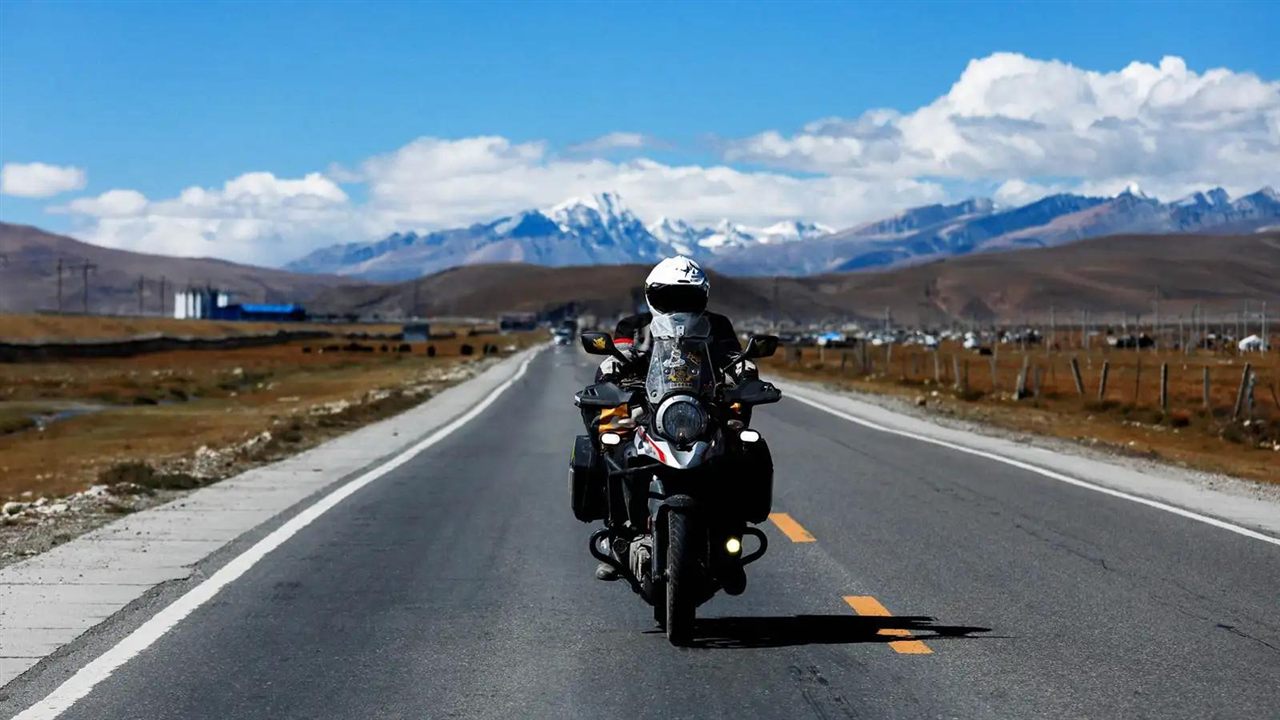
It was -7°C on the G318 outside Markam in late October 2019, and my 2015 Yamaha XT660R (registered in the UK, right-hand drive) died mid-climb. I’d spent 3 days navigating motorcycle entry into China via the 吉隆 port, sorting foreign motorcycle temporary entry China paperwork and a Temporary China Licence before I even hit the road. I’d packed heated gloves, a spare tube, and a multi-tool—but I’d forgotten to swap out my summer-weight 10W-40 engine oil for a 5W-30 winter blend.
By the time I rolled to a stop, the oil had thickened to the consistency of treacle. The starter motor whirred uselessly, and I was stuck 20km from the nearest garage with a fading phone battery. That breakdown taught me more about cold-weather overlanding in China than any pre-trip checklist ever could.
Common Cold-Weather Motorcycle Breakdowns (And How to Fix Them)
Over 4 China motorcycle road trips (covering 12,000km across Sichuan, Qinghai, and Gansu), I’ve seen more cold-related breakdowns than crash-related ones. Here are the small mechanical gremlins that’ll stop you in your tracks when the mercury drops below 0°C.
Thickened Engine Oil
This is the #1 culprit for foreign bikes in China’s high-altitude passes. Most riders ship their bikes with summer oil, assuming it’ll hold up. It won’t. My 2019 breakdown was a perfect example: the cold thickened the oil so much the starter couldn’t turn the engine over. I had to push the bike 2km to a nearby village, where a local mechanic used a propane torch to warm the oil pan (don’t try this at home—keep the flame moving, or you’ll melt the plastic wiring harness).
Fix: Swap to a 5W-30 or 0W-40 synthetic oil before you ship your bike to China. If you forget, carry a 1L bottle of 0W-40 with you—you can top up the old oil to thin it out in a pinch.
Carburettor Icing (For Older Bikes)
I rode a 2008 Honda CG125 on my 2021 trip, and it died twice on the G109 near Golmud. The temperature was -3°C, and the wind was cutting through my jacket like a knife. I pulled over, popped the seat, and found ice clogging the carburettor’s jet. I had to use my hand warmer to thaw it out for 10 minutes before it would start.
Fix: If you’re riding a carburettor-equipped bike (pre-2000 models), carry a can of carburettor cleaner and a hand warmer. Spray the cleaner into the jet, then hold the hand warmer against the carb bowl to melt any ice. Fuel-injected bikes rarely have this issue, but they can still suffer from frozen fuel lines if you leave them out overnight.
Frozen Battery Terminals
Last year, I met a German rider on the 霍尔果斯 port who’d ridden his BMW R1200GS from Kazakhstan. He’d parked his bike outside a guesthouse in Yining for the night, and by morning, the battery terminals were coated in ice. He tried to start it, but the electricity couldn’t flow through the frozen corrosion. We had to scrape the ice off with a coin and apply a thin layer of petroleum jelly to prevent it from re-freezing.
Fix: Clean your battery terminals with a wire brush before you enter China, then coat them with petroleum jelly or dielectric grease. If they freeze on the road, use a credit card to scrape off the ice (don’t use a metal tool—you’ll scratch the terminals).
Frozen Fuel Lines
I saw a French rider’s KTM Adventure die on the Minfeng no-man’s-land highway (closed to foreigners, by the way—don’t try it) in 2022. He’d left his bike out overnight, and the water condensation in his fuel line had frozen solid. We had to tow him to a nearby truck stop, where a mechanic used a heat gun to thaw the line.
Fix: Drain your fuel tank completely before you park your bike for the night. If you can’t, add a fuel-line antifreeze additive (available at most auto parts stores in China) to your tank. Never use a propane torch on a fuel line—you’ll start a fire.
Pre-Trip Prep: Avoid Breakdowns Before They Happen
Breakdowns are frustrating, but most are avoidable with a little prep. Here’s what I do before every China motorcycle road trip to keep my bike running in the cold.
Sort Your Customs Paperwork Early
You can’t just ride your bike into China on your own. Motorcycle customs declaration China must be handled through a qualified travel agency (they need a RMB 1.6 million tourism quality deposit and 3 years of operation). I used this process for my 2019 trip, and the agency handled everything: Mohan border motorcycle customs clearance, motorcycle temporary plate China (valid for 3 months), and the Temporary China Licence. The fee for Mohan entry is RMB 5,000-6,000 (Laos-registered bikes pay RMB 4,000), and it includes all customs, immigration, and route filing. The customs deposit is only RMB 10,000 (paid to the agency’s corporate account, not a personal one), and it’s fully refunded within 3-5 working days after you exit China, as long as you don’t overstay or have unpaid fines.
Pro tip: Submit your documents 20 days before you enter (1 month if you’re planning to visit Tibet). You’ll need your passport, Chinese visa, driving licence, white-background ID photo, vehicle licence, registration certificate, engine number, and photos of your bike’s front, rear, and side. If your bike is over 6 years old, you’ll need an inspection certificate—cost is about RMB 200.
Pack a Cold-Weather Toolkit
I carry a small toolkit on every trip, tailored for cold weather. Here’s what’s in mine:
- 1L of 0W-40 synthetic oil
- Carburettor cleaner
- Petroleum jelly
- Hand warmers (I carry 10 pairs—they’re cheap in China and last 8 hours each)
- A wire brush for battery terminals
- A heat gun (battery-powered, so I don’t need a power outlet)
I don’t recommend carrying a propane torch—they’re too dangerous near fuel lines or plastic parts. A heat gun is safer and works just as well for thawing frozen components.
Know Where You Can Ride
China is mostly open for motorcycle travel, but there are a few restrictions. You can ride nationwide except for Tibet (you need a full-time guide and a Tibet permit), Beijing (you need a capital entry permit), and some border-restricted areas in Xinjiang and Gansu. The G219 at the Dahongliutan section, the Kashgar/Yecheng to Ritu (Pangong Lake) section, and the new Minfeng no-man’s-land highway are closed to foreigners. If you’re riding from Xinjiang to Tibet, you must detour via Golmud on the G109. The legal highways into Tibet are G109, G318, and G214.
Also, China drives on the right—if you’re riding a right-hand-drive bike (like my UK-registered Yamaha), take a few days to adjust. I had a few close calls on my first trip because I kept drifting to the left side of the road.
Final Thoughts: Be Prepared, But Don’t Panic
Cold-weather breakdowns are part of overlanding in China. I’ve been stuck on the side of the road more times than I can count, but each time, a local mechanic or a fellow rider has helped me out. The key is to be prepared: swap your oil, pack the right tools, and sort your paperwork early.
And remember: if you do break down, pull over to a safe spot, put on your hi-vis vest, and call your agency’s support line. They’ll help you find a mechanic or arrange a tow. China’s roads are well-travelled, and most people are happy to help a foreign rider in need.