Last updated: November 18, 2026
Why winter northern China is worth the cold (and how to get there legally)
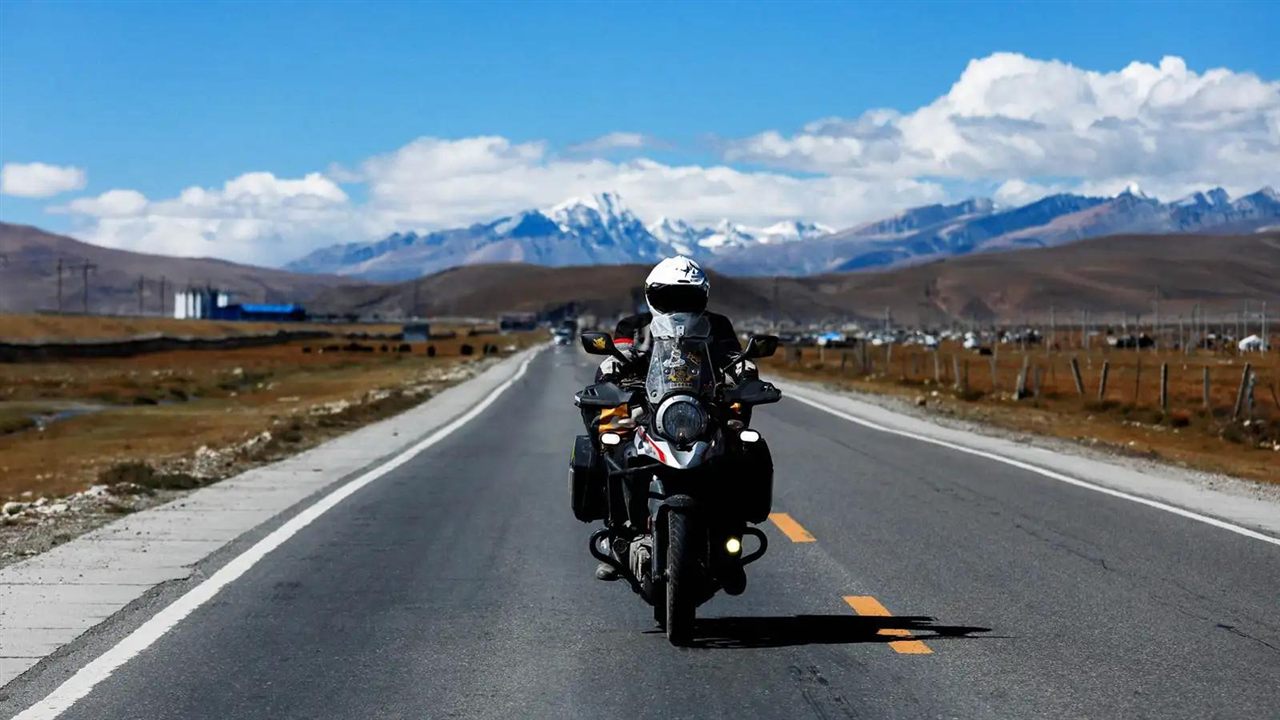
I rode my 2015 left-hand-drive BMW F800GS out of 二连浩特 on a -18°C morning last January, frost crusted on my visor and my throttle hand already going numb after 40 minutes. The G7 stretched west across the Gobi, empty save for a few coal trucks kicking up plumes of grey snow dust. Most riders stick to southern China in winter, but the north has a quiet, stark beauty you won’t find anywhere else — if you can plan your warm stops right, and get your entry paperwork sorted first.
Motorcycle entry into China isn’t something you can wing on a whim. Individuals can’t clear customs on their own; you have to work with a qualified travel agency acting as guarantor. These agencies hold a RMB 1.6 million tourism quality deposit and have three years of operation under their belt, so you’re not dealing with a fly-by-night operator. Foreign motorcycle temporary entry China processes run through four land ports: 磨憨 (China-Laos), 霍尔果斯 (China-Kazakhstan), 吉隆 (China-Nepal) and 二连浩特 (China-Mongolia). Both left- and right-hand-drive bikes are accepted at every port, with the same fees and no surcharge.
Entry fees and permits: what to budget before you ride
When I rode in through 二连浩特 last year, the service fee came to RMB 8,500 for my bike. That covers customs declaration, immigration formalities, your Temporary China Licence, motorcycle temporary plate China, exit clearance, route filing and on-site port assistance. The fee is the same whether you stay one month or three — it’s not charged per day. If you’re planning a cross-through trip, say entering at 霍尔果斯 and exiting at 磨憨, the full package runs RMB 8,000. 磨憨 entry is RMB 5,000-6,000 (Laos-registered vehicles are RMB 4,000), and 霍尔果斯 entry is RMB 6,000-9,000.
What’s not included? The RMB 10,000 customs deposit (paid into the agency’s corporate account, never a personal account, and fully refunded 3-5 working days after exit if you leave on time, have no outstanding fines and no unfinished customs matters), mandatory vehicle insurance, document translation, vehicle inspection (around RMB 200), fuel, tolls, food and accommodation. Compulsory traffic insurance is mandatory — without it, you can’t get a temporary plate issued. The agency purchases it before entry, and you pay the actual cost. Commercial third-party cover starting at RMB 500,000 is optional.
China doesn’t recognise the International Driving Permit, so you’ll need the agency to arrange your Temporary China Licence. The motorcycle temporary plate China is valid for 3 months. If you’re entering with documents that aren’t in Chinese, the agency arranges translation. Vehicles over 6 years old need an inspection certificate, and some ports require a valid home-country annual inspection too.
How I map warm stops along the G7 and G6 corridor
On that January ride from 二连浩特 west, I’d mapped my stops the night before, huddled in a guesthouse with a thermos of chrysanthemum tea. The key rule I’ve learned: don’t wait until you’re freezing to look for somewhere warm. Hypothermia creeps up fast when you’re doing 80km/h into a headwind on a -15°C day. I plan stops every 100-150km, prioritising places with actual indoor seating and hot drinks, not just a petrol station forecourt.
Most riders don’t know that China’s highway service areas (you’ll see them marked with a blue “服务区” sign) are built for winter stops. They have heated lounges, seating, and staff selling hot tea, instant noodles and steamed buns. I’ve pulled into more than one on a frozen afternoon, peeled off my gloves, and sat by a radiator while my gear dried out a little. The trick is to check your route map for service areas before you leave — they’re spaced roughly every 50-80km on major northern highways, and most have parking bays for motorcycles.
Off the highway, small county towns along G109 and G6 have family-run restaurants that double as warm stops. Look for places with steam coming out the door, or a sign with photos of hot dishes. I stopped at one outside Hohhot last winter, ordered a bowl of lamb noodle soup for RMB 18, and sat by their coal stove for 40 minutes while my boots dried. The owner didn’t speak English, but he refilled my tea twice without me asking. That’s the kind of stop you can’t pre-book — you have to keep an eye out for them as you ride.
What to look for when you’re scanning for a warm stop
I don’t waste time with places that don’t tick these boxes, especially in winter when every minute outside is a minute you’re losing heat:
- Actual indoor seating — not just a counter to lean on. Look for tables and chairs near a heater or stove.
- Hot drinks on offer. Tea, coffee, or even hot water for your own thermos. A cup of hot tea warms you faster than you’d think when your hands are numb.
- Covered parking for your bike. You don’t want to leave it out in the snow while you thaw out.
I made a mistake once, early on in my China motorcycle road trip, stopping at a roadside stall that only had outdoor seating. I drank my tea in 5 minutes, my fingers so stiff I could barely hold the cup. Never again. Now I’ll ride an extra 10km to a proper service area rather than suffer through a cold stop.
Border port logistics: timing and what to expect
Ports aren’t open 24 hours, so don’t roll up at 10pm expecting to clear. I arrived at 二连浩特 at 9am last January, and the whole customs declaration China process took about 2 hours. The agency’s on-site assistant met me at the gate, handed me my temporary plate and licence, and walked me through the immigration formalities. You don’t need an escort or lead vehicle on most routes — just stick to the route you filed with the agency. If you get pulled over at a checkpoint, the agency provides supporting documents remotely.
China drives on the right, so if you’re riding a right-hand-drive bike, give yourself time to adapt. I rode a friend’s right-hand-drive Honda CB500X through 磨憨 once, and it took me a good hour to get used to looking left before pulling out at junctions. Don’t rush that adjustment.
Where you can (and can’t) ride in northern China
Most of northern China is open for your China motorcycle road trip, but there are exceptions you need to know about. Tibet requires a full-time guide and a Tibet permit — your Temporary China Licence is valid there, but you can’t ride it alone. Beijing needs a capital entry permit. Some border-restricted areas in Xinjiang and Gansu are off limits. The G219 at the Dahongliutan section, and the Kashgar/Yecheng to Ritu (Pangong Lake) section are closed to foreigners, as is the new Minfeng no-man’s-land highway. If you’re heading from Xinjiang to Tibet, you have to detour via Golmud on G109. The legal highways into Tibet are G109, G318 and G214.
Plan your route around these restrictions before you file your entry paperwork. The agency will help you adjust your route filing if needed, but it’s easier to get it right the first time.
Winter riding tips for the northern cold
I keep a thermos of hot tea in my pannier at all times. It’s not just for stops — if I’m stuck in a traffic jam or a checkpoint, a sip of hot tea keeps my core temperature up. I also pack a pair of thin glove liners, so when I take my outer gloves off to pay for fuel or sign paperwork, my hands don’t freeze instantly.
Check the weather forecast before you set off each day. Northern China can get blizzards out of nowhere, and if you’re caught on an open stretch of highway, there’s nowhere to hide. I’ve turned back twice when the forecast called for heavy snow — better to lose a day than get stranded.
And don’t underestimate how much faster you get tired when it’s cold. Your body burns more energy just staying warm, so plan shorter riding days in winter. 300-400km a day is plenty, especially if you’re stopping every couple of hours to thaw out.