Last updated: November 16, 2026
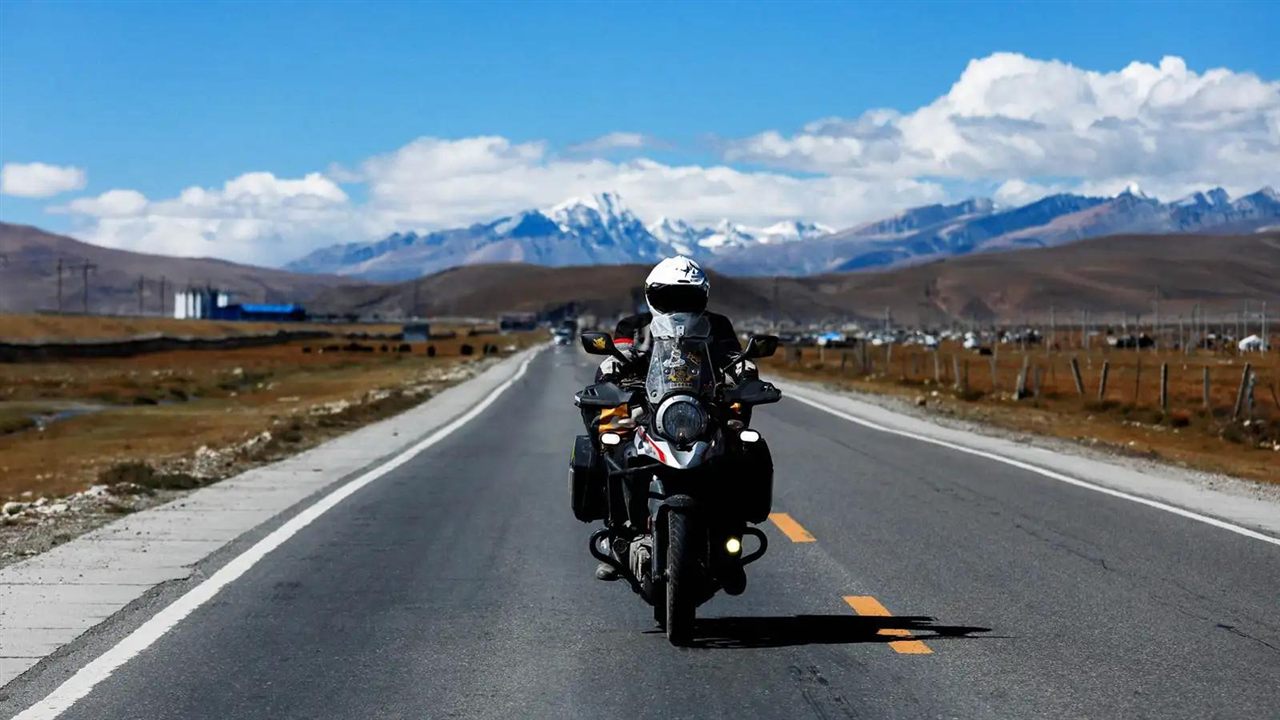
Last autumn, I leaned my right-hand-drive Thai-registered Honda CRF250 Rally against a splintered wooden bench at a teahouse 40km outside Nyalam, the thin, cold mountain air sharp enough to make my nostrils tingle, as three other riders in our group peeled off their helmets. We were 12 days into a 2000km China motorcycle road trip, rolling toward the 吉隆 (Gyirong) port on the Nepal-Tibet border, and I’d spent three weeks before departure mapping every fuel pump and pull-off where we could stop without getting turned around by border checkpoints. Group riding across international borders is never just about twisting the throttle — half the job is working out where you can pause, refuel, and not run afoul of the rules for foreign motorcycle temporary entry China.
Before we even left Kathmandu, I sat down with a notebook to work out the non-negotiable admin first, because you can’t wing rest stops if you don’t have permission to be on the road in the first place.
Why you can’t just rock up to the border on your own
I’d heard stories from other riders who tried to clear 吉隆 independently a few years back, and none of them had a smooth time. The hard rule is simple: a foreign vehicle must be declared through a qualified travel agency acting as guarantor. Individuals have no standing to declare, and you cannot clear customs on your own. That agency needs a RMB 1.6 million tourism quality deposit and three years of operation to be eligible, so you’re not dealing with a random guy offering to stamp your papers for cash.
For our four motorcycles, the fee structure was straightforward — the same RMB 5,000-6,000 entry rate applies to cars, motorhomes and motorcycles, no surcharge for right-hand-drive bikes, same as every other port including 磨憨 (Mohan) for Mohan border motorcycle customs clearance, 霍尔果斯 (Khorgos), and 二连浩特 (Erenhot). The fee covers customs declaration, immigration formalities, your Temporary China Licence, motorcycle temporary plate China, exit clearance, route filing, and on-site port assistance. It doesn’t cover the RMB 10,000 customs deposit per bike, vehicle insurance, document translation, the ~RMB 200 vehicle inspection, fuel, tolls, food, or accommodation. Crucially, the fee doesn’t change if you stay one month or three months — it’s not charged per day.
That RMB 10,000 deposit? It gets paid into the agency’s corporate account, never a personal account, and has to land three full days before our entry date. If it’s late, the declaration gets cancelled and the service fee isn’t refunded. We set a calendar reminder three weeks out to send the transfer, because none of us wanted to turn up to the port and be turned away for a missed payment. If we exit on time, no overstay, no outstanding traffic fines, no unpaid fees, that deposit comes back in 3-5 working days via the same route.
We also sorted the compulsory traffic insurance before entry — mandatory, because you can’t get a temporary plate without it — and added optional RMB 500,000 commercial third-party cover, paying the actual cost to the agency who arranged it. I brought along all our documents 20 days ahead: passports, Chinese visas, home driving licences, white-background ID photos, vehicle licences, registration certificates, engine numbers, and one photo of each bike from front, rear, and side. Since we were riding into Tibet, we pushed that timeline to a full month out, to leave space for the Tibet permit processing.
Mapping rest stops for four bikes on the road to Gyirong
When we were mapping our route, I quickly realised that rest stops aren’t just about finding a coffee shop. On high-altitude stretches, you stop because your brain gets fuzzy before you notice you’re hypoxic. On long, straight highway sections, you stop because your wrists go numb. And on border-adjacent roads, you stop only in designated pull-offs, because random parking on the shoulder can get you pulled over by patrol who want to check your route filing.
Our rule for the group was simple: stop every 90 minutes, no exceptions. We had one rider who’d never ridden above 4000m before, and on the climb up to the Lalung La pass, he started slurring his words when we pulled over — we made him sit for 20 minutes, sip warm tea, and wait until his colour came back before we moved on. I’d rather lose 20 minutes to a rest stop than have someone collapse on the road.
We picked rest stops that had three things: a paved pull-off big enough for four bikes, a public toilet, and a small shop selling bottled water. The teahouse outside Nyalam was one of our favourites — the owner made butter tea that was so salty it made my eyes water, but it warmed us up faster than any thermos. We never stopped on unmarked shoulder bends, because the road has sharp drop-offs and fast-moving trucks that don’t slow down for parked bikes.
Fuel stops: never let your tank drop below half
I learned this the hard way on our first day out. I thought I could stretch a full tank 350km, and I almost ran dry 40km from the next petrol station when the temperature dropped 10 degrees and my fuel consumption spiked. From that point on, we had a group rule: fill up every time the needle hits the half-way mark, no matter how far the next station looks on the map.
Petrol stations on the route to Gyirong are spaced between 80km and 150km apart, mostly in small towns. You don’t need to carry extra jerry cans — in fact, it’s easier not to, because carrying spare fuel can raise questions at checkpoints. We always filled up before leaving a town, even if we’d only topped up that morning. On the day we crossed the port, we filled every tank in Nyalam, because fuel gets more expensive and less reliable the closer you get to the border.
We also kept a printed copy of our filed route in every bike’s tank bag. You don’t need an escort or lead vehicle, except for the mandatory full-time guide we had for our Tibet section. At checkpoints, the agency provides supporting documents remotely, so we never had to fumble for a phone signal to prove we were allowed on that road.
Rules to remember before you roll
China drives on the right. Our group had two right-hand-drive bikes, and the riders took an extra 20 minutes at the first petrol station after customs to get used to pulling over to the left side of the pump, to avoid pulling out into oncoming traffic. Ports aren’t open 24 hours, so we timed our arrival for 9am, right after the morning shift started, to avoid the afternoon rush.
We stuck to the legal highways into Tibet: G109, G318, G214. We knew the restricted sections — the G219 Dahongliutan stretch, the Kashgar/Yecheng to Ritu route, the new Minfeng no-man’s-land highway — were off limits, so we didn’t even try to route through them. If we’d wanted to ride from Xinjiang to Tibet, we’d have detoured via Golmud on G109, no shortcuts.
On exit day, we rolled back to 吉隆 with 20km left in each tank, kept all our paperwork in a sealed plastic folder, and waited for the customs check. It took 40 minutes, no holdups, and our deposit was back in our account four working days later.
The best part of group motorcycle entry into China is that it doesn’t have to be chaotic. You just plan the stops, top up the fuel, and let the agency handle the paperwork. I’d never try to clear customs on my own — the hassle isn’t worth the risk of being turned away at the gate.