Last updated: November 17, 2026
Khorgos Border Motorcycle Entry: What I Learned With My Knobbly-Tired GS
Last April, I rolled up to Khorgos (霍尔果斯) at 7.45am, Kazakh plate on my 2019 right-hand-drive adventure bike, off-road tires still caked in the red dust of the Almaty region. I’d done my homework on motorcycle entry into China, but I still had that tight-chested jitter you get before a new border. The sun glinted off the grey port buildings, and a gust of wind carried the smell of diesel and fried bread from a nearby stall.
I’d already lined up a qualified travel agency to handle my motorcycle customs declaration China, because individuals have no standing to declare and can’t clear customs on their own. The agency had the required RMB 1.6 million tourism quality deposit and three years of operation under their belt, so I knew I wasn’t cutting corners.
Off-Road Tires: The Inspection Question Everyone Asks
Let’s cut to the bit every adventure rider obsesses over: do knobbly off-road tires cause problems at Khorgos? I’d spent three nights scrolling forums going in circles, so I asked the agency contact point-blank two weeks before I left.
“Tire tread depth and condition matter,” they said. “Off-road pattern is fine, as long as the tires are road-legal in your home country and match your registration documents.”
On the day, the inspector walked slowly around my bike, knelt down to run a hand over the front tire, and checked the sidewall markings against the registration paperwork. He tapped the tread block with his knuckle, glanced up at me, and nodded. No fuss, no arguments.
The vehicle inspection cost about RMB 200, and it’s one of the items not included in the standard service fee. Khorgos entry runs 6,000–9,000 RMB per vehicle, and the fee covers customs declaration, immigration formalities, temporary driving licence, temporary plate, exit clearance, route filing and on-site port assistance. It doesn’t cover the inspection, insurance, document translation, customs deposit or any on-the-road costs.
Before You Even Get to the Border
There’s a stack of paperwork you need to send over 20 days in advance (a month if you’re heading to Tibet). I fumbled a bit here — I almost forgot to include clear photos of the front, rear and side of the bike, plus the engine number.
Here’s the list I ended up working from, scribbled in the back of my road notebook:
- Passport, Chinese visa, driving licence, white-background ID photo
- Vehicle licence, registration certificate, engine number
- One photo each of front, rear and side of the motorcycle
- Inspection certificate if your bike is over 6 years old
Documents other than a Chinese licence need Chinese translation, which the agency arranges. Bikes over six years old also have to pass an inspection at the vehicle management office after entry, and some ports ask for a valid home-country annual inspection certificate too. Mine was four years old, so I skipped that part.
China doesn’t recognise the International Driving Permit, so you’ll need a China temporary driving licence — the agency sorts that for you. The motorcycle temporary plate China issues is valid for three months, and the fee stays the same whether you stay one month or three. No daily charges.
The Customs Deposit: Get It in Early
I nearly made a stupid mistake here. I’d planned to transfer the customs deposit two days before arrival, until I re-read the agency’s note at 11pm the week before.
With the agency’s guarantee, the customs deposit is only RMB 10,000. It has to go into a corporate account, never a personal one, and it must arrive three days before entry. If it’s late, the declaration gets cancelled and the service fee isn’t refunded.
I fumbled with my banking app in a hostel dorm in Zharkent, squinting at the screen by phone torchlight, and got the transfer sent just in time. It’s fully refunded by the same route within 3–5 working days after exit, as long as you leave on time, have no outstanding traffic fines, and no unpaid fees or unfinished customs matters.
Insurance, Plates and Hitting the Road
Compulsory traffic insurance is mandatory — without it, you can’t get a Temporary China Licence or a temporary plate. The agency purchases it before entry and you pay the actual cost. Commercial third-party cover from RMB 500,000 is optional; I took it out, because the thought of pranging my bike on a Chinese mountain road and being on the hook for costs made me wince.
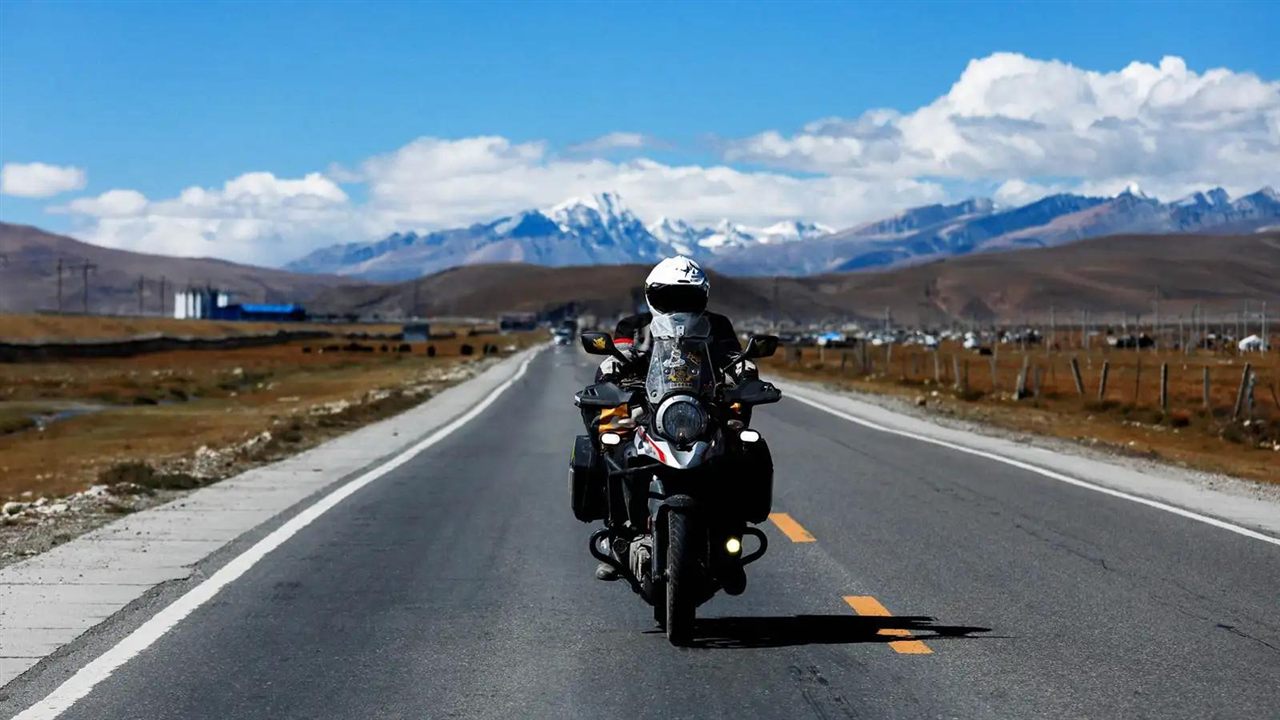
Once the inspection was done and the paperwork checked, I had my temporary plate and licence in hand by mid-afternoon. I strapped my bags back on, adjusted my mirrors, and pulled out onto the Chinese highway. China drives on the right, which takes a minute to click if you’re used to left-hand-drive; I stalled twice at the first set of lights, much to the amusement of the lorry driver next to me.
Where You Can Actually Go
You can travel nationwide, but there are restrictions. Tibet requires a full-time guide and a Tibet permit — the temporary driving licence is valid across the whole country, so there’s no separate Tibet driving licence to worry about. Beijing needs a capital entry permit. Some border-restricted areas in Xinjiang and Gansu are off limits, and the G219 Dahongliutan section, plus the Kashgar/Yecheng to Ritu (Pangong Lake) stretch, are closed to foreigners. The new Minfeng no-man’s-land highway is also closed to foreigners.
If you’re heading from Xinjiang to Tibet, you have to detour via Golmud on G109. The legal highways into Tibet are G109, G318 and G214. I did G315 across Qinghai later that trip, and it was worth every mile of wind and dust.
For context, Mohan border motorcycle customs clearance is another common route if you’re coming from Laos; Mohan entry is 5,000–6,000 RMB, or 4,000 for Laos-registered vehicles. There’s also a cross-through package — Khorgos in / Mohan out or the reverse — for 8,000 RMB full package, which is handy if you’re doing a full China motorcycle road trip from west to south. Erenhot (二连浩特) and Gyirong (吉隆) are the other two land ports, plus Dalian, Guangzhou and Shenzhen for sea entry. Both left- and right-hand-drive vehicles are accepted at every port, same fees, no surcharge.
A Few Hard-Earned Tips
Ports aren’t open 24 hours, so don’t rock up at midnight expecting to get through. I arrived early and still waited a couple of hours during the morning rush.
Stick to the filed route. You don’t need an escort or lead vehicle (except the mandatory Tibet guide), but if you get stopped at checkpoints, the agency provides supporting documents remotely. I got pulled over at a checkpoint outside Urumqi, showed my temporary plate and licence, and the officer radioed through to confirm my route. Ten minutes later I was on my way again.
China offers 30-day visa-free entry, but if you want to stay longer, the agency can issue an invitation letter to help you get a longer tourist visa.
My off-road tires held up fine across 7,000 kilometres of tarmac and gravel, and they never caused me a single issue at any checkpoint. The key is making sure your documents match, your tires are in good shape, and you’ve got all the paperwork sorted well before you reach the border.
Last thing: double-check the deposit deadline. I still cringe thinking how close I came to messing that up. Don’t be that rider.