Last updated: November 17, 2026
Temporary China Licence: Photo and Identity Document Specifications for Foreign Rider Applications
I stood sweating through my riding jacket at Mohan (磨憨) last April, the Laos jungle humidity sticking my passport to my palm, watching a fellow rider get turned away from motorcycle entry into China because his ID photo had a blue background. I’d ridden 3,000km from Vientiane on my Thai-registered right-hand-drive Honda, and I’d nearly made the same mistake. That’s the thing about foreign motorcycle temporary entry China – the small paper details will derail your trip faster than a pothole on a mountain pass.
First: The Agency Reality No One Tells You Straight
Let’s get this out before we talk photos. You cannot walk up to Mohan border motorcycle customs clearance alone. I tried, in that bullheaded way only a rider who’s crossed 12 borders can. The official just shook his head and pointed back towards Laos. A foreign vehicle must be declared through a qualified travel agency acting as guarantor – individuals have no standing to declare and cannot clear customs on their own.
The qualified agencies hold a 1.6 million RMB tourism quality deposit and have 3 years of operation under their belt. I’d done my research wrong beforehand, thought I could sort it on the day. I sat on a plastic stool by the border gate for two hours, sipping iced coffee that tasted like burnt sugar, while the agency I’d booked last minute sorted my paperwork remotely.
ID Photo Specs That Will Make or Break Your Application
The rider who got turned away? He’d used a passport-style photo with a blue background, same one he’d used for his Vietnamese visa. The Temporary China Licence needs a white-background ID photo. Full stop.
I brought six 35x45mm prints, same size as UK passport photos, with my head uncovered and no sunglasses. The agency told me digital copies work too, but I’m old school – I like having physical spares stuffed in every pocket of my jacket. I’ve lost count of the times a crumpled photo in my liner has saved me at a checkpoint.
Your face needs to be front-facing, no smile that stretches your features, no hair covering your eyes. I had a mate who wore a bandana in his photo; they made him retake it at the port’s photo booth, which ate up an hour of daylight we could have spent riding north to Kunming.
Identity and Vehicle Documents: What You Need 20 Days Out
Don’t wait until you’re 100km from the border. Send all your documents to the agency 20 days ahead – 1 month if you’re heading to Tibet. I cut it fine with my Laos crossing and spent three nights refreshing my email in a Luang Namtha guesthouse, worrying my registration scan wasn’t clear enough.
You’ll need these core documents, and anything not in Chinese needs translation – the agency arranges that, don’t try to do it yourself with a phone app:
- Passport and Chinese visa (China offers 30-day visa-free entry; for longer stays, the agency issues an invitation letter to help get a longer tourist visa)
- Your home-country driving licence (China does not recognise the International Driving Permit – forget everything you’ve read about IDPs working here)
- Vehicle licence and registration certificate
- Engine number (I had to lean down and scrape mud off my engine casing to read mine, take a clear photo before you leave home)
- One photo each of the front, rear and side of your bike
- White-background ID photo, as we talked about
Bikes over 6 years old need an inspection certificate too. My Honda’s 7 years old, so I brought my valid Thai annual inspection document. After entry, I still had to pass an inspection at the vehicle management office, which cost about 200 RMB and took 40 minutes – they checked my lights, brakes and tyre tread, no fuss.
What the Fees Cover (and What They Don’t)
I went with Mohan entry, which cost 5,000-6,000 RMB – Laos-registered vehicles get a lower rate of 4,000 RMB, but my Thai plate didn’t qualify. The fee covers all the big stuff: motorcycle customs declaration China formalities, immigration paperwork, your Temporary China Licence, motorcycle temporary plate China issuance, exit clearance, route filing and on-site port assistance. It’s the same price whether you stay one month or three months, no daily charge.
What’s not included? Customs deposit, vehicle insurance, document translation, that 200 RMB vehicle inspection, and all your on-road costs like fuel, tolls, food and accommodation. I’d budgeted extra for the deposit, which was 10,000 RMB with the agency’s guarantee. It goes into a corporate account, never a personal one, and has to arrive 3 days before entry – if it’s late, your declaration gets cancelled and the service fee isn’t refunded. I paid mine a week early just to be safe.
You get the deposit fully refunded 3-5 working days after exit, as long as you leave on time with no overstay, no outstanding traffic fines and no unfinished customs matters. Mine hit my account 4 days after I crossed back into Laos, no issues.
Compulsory traffic insurance is mandatory – you can’t get a temporary plate without it. The agency purchases it before entry, and you pay the actual cost. I added optional commercial third-party cover of 500,000 RMB too; riding in a country where you don’t speak the language, I’d rather pay extra for peace of mind.
Where You Can Actually Ride (and Where You Can’t)
The temporary plate is valid for 3 months, and you can ride nationwide – mostly. I planned a route down G219 until the agency told me the Dahongliutan section, plus the Kashgar/Yecheng to Ritu (Pangong Lake) stretch, are closed to foreigners. The new Minfeng no-man’s-land highway is off limits too.
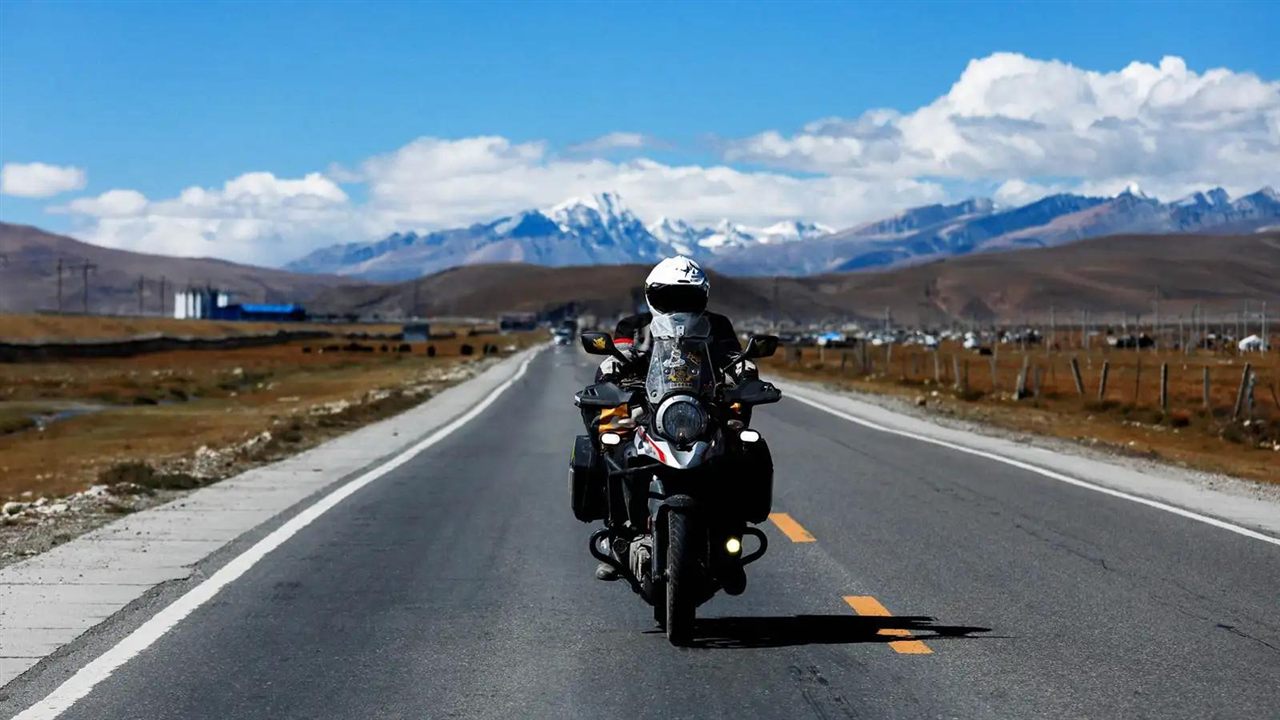
If you’re heading to Tibet, you need a full-time guide and a Tibet permit – the temporary driving licence is valid nationwide, so no separate Tibet driving licence is required. You can only take legal highways into Tibet: G109, G318, G214. If you’re going from Xinjiang to Tibet, you have to detour via Golmud on G109.
Beijing needs a capital entry permit, and some border-restricted areas in Xinjiang and Gansu are closed. I stuck to Yunnan and Sichuan on my last trip, winding through the hills around Dali, and didn’t hit any restricted zones.
My One Big Misjudgement (and How You Can Avoid It)
I ride right-hand drive, and I knew China drives on the right. I thought I’d adapt in a day. I didn’t. On my first day north of Mohan, I pulled out of a petrol station and drifted straight into the left lane before a truck honked so loud my teeth rattled. I pulled over, my hands shaking, and sat for 10 minutes breathing through the adrenaline.
Give yourself time. Take it slow on the first day. Stick to smaller roads if you can, until the muscle memory switches over.
Ports aren’t open 24 hours either. I arrived at Mohan at 7pm once, after a delayed ride from Luang Prabang, and had to camp in a border car park overnight, listening to the crickets and the distant bark of dogs. Leave early if you’re aiming to cross the same day.
If you get stopped at checkpoints, the agency provides supporting documents remotely. I got pulled over outside Jinghong for a routine check, called the agency’s contact in the footer of their website, and they sent over the paperwork in 10 minutes. No escort or lead vehicle is needed, except the mandatory Tibet guide – you’re free to ride at your own pace, as long as you stick to your filed route.
At the end of the day, a China motorcycle road trip is worth every bit of paperwork. I still think about that stretch of road between Yuanyang and Kunming, the rice terraces glowing green under the sun, my bike humming under me. Just get your photos right. Save yourself the sweat.